
Belgium Schengen Visa Requirements: How to Apply, Documents & Processing Time
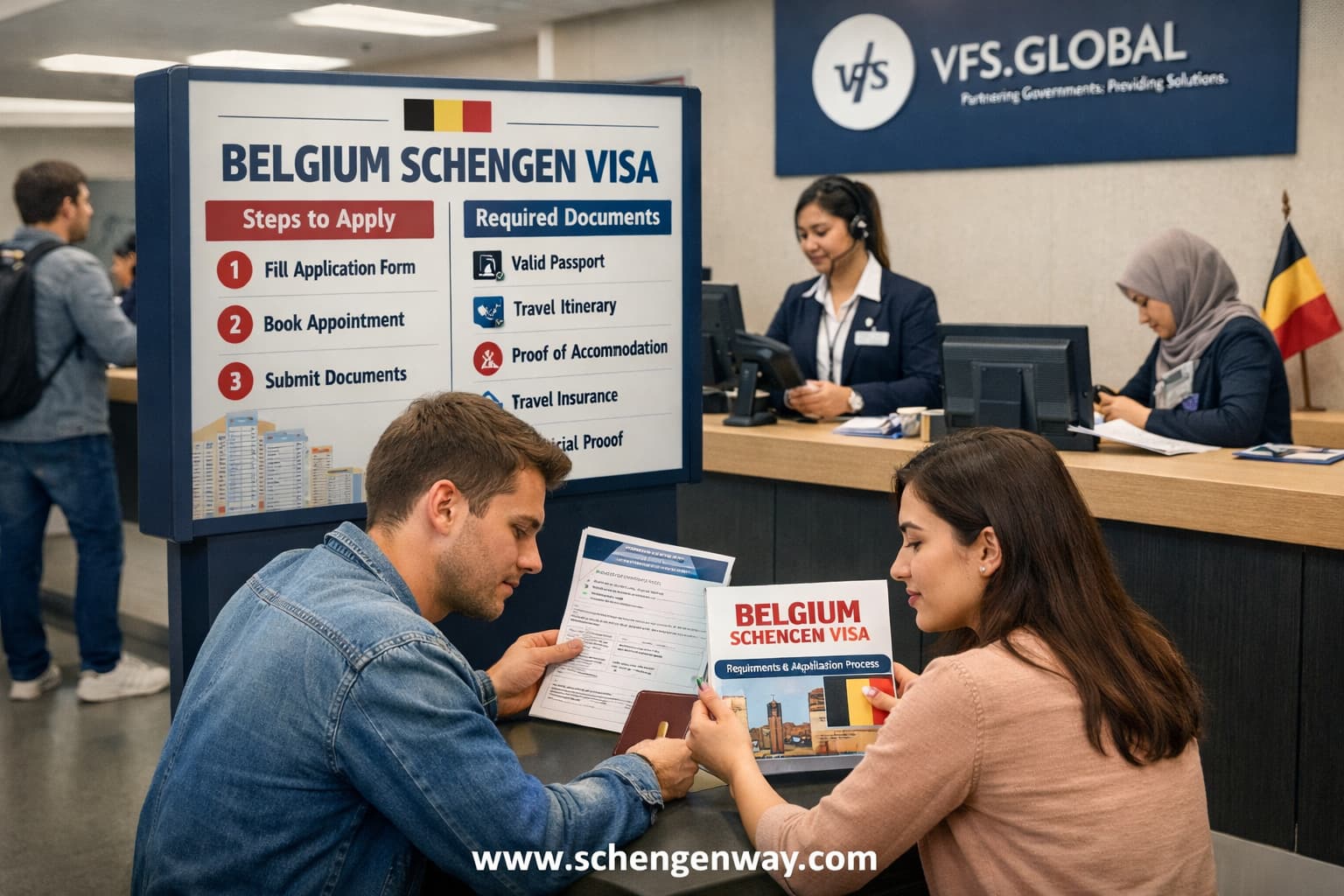
Many travelers already have their trip planned before they think about the visa. They want to see the Grand Place in Brussels, visit family in Antwerp, attend a conference, or simply explore Belgium’s historic towns like Bruges and Ghent. Flights are checked, hotels are shortlisted, and then the question comes up:
“Do I actually need a visa to enter Belgium?”
That’s where things usually get confusing.
Belgium is part of the Schengen Area, which means the visa rules are shared with most European countries. So when you apply for a Belgium Schengen visa, you’re not just applying to enter Belgium alone — you’re applying to enter the entire Schengen zone.
But the process isn’t as complicated as it sounds when you understand the basics.
In this guide, I’ll walk you through exactly how the Belgium Schengen visa application works — the types of visas available, who needs one, the documents required, the Belgium visa processing time, and how much it costs.
What Are the Different Types of Visas to Enter and Stay in Belgium?
Before applying for a Belgium Schengen visa, the first thing you need to understand is that Belgium issues different visa types depending on why you are traveling and how long you plan to stay.
Short-Stay Schengen Visa (Type C)
This is the most common visa people apply for when visiting Belgium.
The Belgium Schengen visa (Type C) allows travelers to stay in Belgium or anywhere in the Schengen Area for up to 90 days within a 180-day period.
People usually apply for this visa for purposes such as:
- Tourism
- Visiting family or friends
- Business meetings
- Conferences or events
- Short training programs
- Cultural or sports activities
- Short internships
Because Belgium is part of the Schengen zone, this visa does not restrict you to Belgium alone. Once you enter the Schengen area, you can travel between member countries like France, Germany, the Netherlands, Italy, and Spain without additional border checks.
However, your main destination must be Belgium if you apply for a Belgium visa.
Understanding the 90/180 Day Rule
This rule confuses a lot of people.
The Schengen 90/180 rule simply means you cannot stay in the Schengen area for more than 90 days within any rolling 180-day period.
Here’s a simple way to think about it.
If you enter Belgium on January 1, immigration authorities will look back 180 days from the day you leave to make sure your total stay does not exceed 90 days.
For frequent travelers, this rule becomes very important because overstaying can lead to visa refusals in the future.
Pro Tips:
Many travelers accidentally overstay their visa simply because they misunderstand the Schengen 90/180 day rule. To avoid this mistake, you can use our Schengen Stay Checker to verify how long you’re allowed to remain in the Schengen area before planning your Belgium trip.
Single Entry, Double Entry, and Multiple Entry Visas
A Belgium Schengen visa can also differ based on how many times you are allowed to enter the Schengen zone.
A single-entry visa allows you to enter the Schengen area only once. Once you leave, the visa becomes invalid.
A double-entry visa allows two entries.
A multiple-entry visa allows you to enter and exit the Schengen area several times within the visa validity period.
Multiple-entry visas can sometimes be issued for six months, one year, three years, or even five years, depending on your travel history and the decision of the visa officer.
Long-Stay Visa (Type D)
If you plan to stay in Belgium for more than 90 days, you cannot apply for a Schengen visa.
Instead, you will need a Belgium long-stay visa (Type D).
This visa is usually issued for:
- Work permits
- Student visas
- Family reunification
- Long-term residence
- Research or academic programs
The application process for long-stay visas is very different and often involves approval from Belgian immigration authorities.
For most travelers visiting Belgium for tourism, business, or short visits, the Belgium Schengen visa (Type C) is the visa you’ll be applying for.
Do You Need a Schengen Visa to Visit Belgium?
This is usually the first question people ask me.
And the honest answer is: it depends on your passport.
Some travelers can enter Belgium without applying for a visa, while others must apply for a Belgium Schengen visa before they travel.
Travelers Who Do NOT Need a Belgium Schengen Visa
You do not need a visa to visit Belgium if you fall into certain categories.
For example, citizens of European Union countries and other Schengen states can travel freely to Belgium. This is because border controls within the Schengen area have largely been removed.
There are also a few European microstates whose citizens can enter Belgium without visas, including Andorra, Monaco, San Marino, and Vatican City.
Another category includes travelers who already hold a valid residence permit issued by a Schengen country. If you legally reside in a Schengen state, you can generally travel within the zone without applying for a new visa.
In addition, citizens from several countries such as the United States, Canada, the United Kingdom, Australia, Japan, and Brazil are currently allowed to visit the Schengen area for short stays without a visa.
However, even visa-exempt travelers must meet certain requirements. For example, their passport must be valid for at least three months after their planned departure from the Schengen area, and it must have been issued within the last ten years.
Another important change is coming into effect soon. Starting in the near future, travelers who are currently visa-exempt will need to apply online for travel authorization through the ETIAS system (European Travel Information and Authorization System) before entering the Schengen area.
Travelers Who MUST Apply for a Belgium Schengen Visa
If your country does not have a visa-free agreement with the European Union, you will need to apply for a Belgium Schengen visa before traveling.
This applies to many countries in Africa, Asia, and parts of the Middle East.
For example, travelers from Nigeria, Ghana, India, Pakistan, and several other countries are required to apply for a visa before entering Belgium.
If you fall into this category, you will need to submit a Belgium Schengen visa application, attend an appointment at a visa center or embassy, and provide supporting documents proving the purpose of your trip.
How to Apply for a Schengen Visa for Belgium
When people hear the phrase Belgium Schengen visa application, they often imagine a complicated process with endless paperwork. In reality, the process is quite structured. If you follow the steps properly and prepare your documents ahead of time, the application becomes much easier.
The most important thing to understand is that Schengen visa rules are largely the same across all Schengen countries. That means Belgium follows the same visa framework used by countries like France, Germany, Italy, and Spain.
However, you must submit your application to Belgium if:
- Belgium is your main destination, or
- Belgium is the first Schengen country you will enter
If your main reason for traveling is to stay in Belgium, then your visa application must be handled by Belgian authorities.
Step 1: Complete the Belgium Schengen Visa Application Form
The process starts online. Go to the official website and create/login to your account.
Applicants need to fill out the Belgium Schengen visa application form, which collects important information about your identity, travel plans, accommodation, and purpose of visit.
This form usually asks for details such as:
- Your full name and passport information
- Your travel dates
- Where you will stay in Belgium
- The purpose of your visit (tourism, business, family visit, etc.)
Once the form is completed online, you will normally receive a PDF version of the application form. This must be printed, dated, and signed before your appointment.
It’s important to double-check everything before submitting the form. Small mistakes like incorrect travel dates or passport numbers can delay your visa processing.
If you are confused on how to properly fill your form, I have a full guide where I explained in details, the step-by-step process of completing a schengen visa form.
Step 2: Book an Appointment at the Embassy or Visa Centre
After completing the application form, the next step is to schedule an appointment to submit your visa application.
Depending on where you live, you may submit your application through:
- The Belgian Embassy or Consulate, or
- An authorized visa processing centre such as VFS Global or TLScontact
Many countries now use these external visa centres to manage appointments and document submissions.
Your appointment is where you will physically submit your Belgium Schengen visa application file.
Appointments can fill up quickly, especially during peak travel periods like summer holidays or Christmas. That’s why it’s always a good idea to book early.
Related article>> France Visa Requirements 2026: Complete Guide to the France Schengen Visa (Step-by-Step)
Step 3: Attend Your Visa Appointment and Submit Your Documents
On the day of your appointment, you will need to bring your complete visa application file.
This includes your passport, your printed application form, and all the required supporting documents.
During the appointment, the visa officer or visa centre staff will review your documents and make sure everything is complete.
At this stage, you will also:
- Submit your biometric data (fingerprints and photograph)
- Pay the Belgium Schengen visa fee
- Provide your travel documentation
Biometric data collection is a standard requirement for most Schengen visa applications.
However, there are a few exceptions.
Children under 12 years old are usually exempt from fingerprint collection. In addition, travelers who have already submitted biometric data within the past 59 months may not need to provide fingerprints again.
Step 4: Wait for Visa Processing
Once your application is submitted, the waiting period begins.
Your application will be reviewed by Belgian visa authorities to determine whether your Belgium Schengen visa will be approved.
The visa officer will carefully examine:
- Your travel purpose
- Your financial capacity
- Your ties to your home country
- Your travel history
If everything is in order and your documents are clear, your visa can be approved without additional checks. In some cases, the application may be sent to Belgium’s immigration authorities for further review.
When a visa is approved, a visa sticker will be placed inside your passport. This sticker contains important details such as:
- The visa validity dates
- The number of entries allowed
- The maximum number of days you can stay
This sticker is what allows you to legally travel to Belgium and the Schengen area.
Pro Tip:
Before you finalize your travel dates, it’s a good idea to verify how long you can stay in the Schengen area. Use the Schengen Visa Validity Checker to calculate your allowed stay and avoid accidental visa overstays.
What Are the Belgium Schengen Visa Requirements?
Now let’s talk about something that causes the most visa refusals: not understanding the actual Belgium Schengen visa requirements.
Many applicants assume that submitting a few documents is enough. But visa officers are looking for something very specific when they evaluate a Belgium Schengen visa application.
They want to see clear evidence of three main things.
First, they need to confirm why you are traveling to Belgium. Your documents must clearly explain the purpose of your visit, whether it’s tourism, business, visiting family, or attending an event.
Second, they need proof that you can financially support yourself during your stay. Belgium wants to ensure visitors will not rely on public assistance.
Third, and most importantly, they must be convinced that you will leave the Schengen area before your visa expires.
This is why documents proving your ties to your home country are extremely important. Things like employment letters, business registration documents, or school enrollment help demonstrate that you have strong reasons to return home after your trip.
Think of your visa application as a story about your trip.
Every document you submit should support that story and make it clear that your travel to Belgium is legitimate and temporary.
When the application file is consistent and well prepared, the chances of getting a Belgium Schengen visa approval increase significantly.
What Are the Documents Required for Belgium Schengen Visa?
When preparing your Belgium Schengen visa application, the supporting documents you submit play a major role in whether your visa is approved.
Although the exact requirements can vary depending on your personal situation and the purpose of your visit, there are several core documents that almost every applicant must provide. You can also check out the Schengen Visa Requirements for All Applicants (Master Checklist).
Valid Passport
Your passport must meet the standard Schengen requirements.
Like I said in the beginning, it must have been issued within the last ten years and must remain valid for at least three months after your planned departure from the Schengen area.
In addition, the passport must contain at least two blank pages for visa stamps.
Visa officers will also look at your previous travel history if there are older visas or entry stamps inside your passport.
Passport Copies
Applicants are usually required to submit photocopies of the main information page of their passport, as well as copies of previous visas and entry stamps if available.
These copies help visa authorities verify your travel history.
Completed Visa Application Form
The Belgium Schengen visa application form must be properly completed and signed.
Unsigned forms are a common reason applications are rejected or delayed.
Travel Itinerary
You must provide evidence of your travel plans.
This often includes flight reservations or round-trip booking confirmations showing your intended entry and exit dates from the Schengen area.
Visa officers use this information to verify the duration of your trip.
Proof of Accommodation
Applicants must show where they will stay during their visit to Belgium.
This can be:
- Hotel reservations
- Rental accommodation bookings
- A letter of invitation from a host in Belgium
If you are staying with a friend or family member, they may also need to provide additional supporting documents.
Proof of Financial Means
One of the most important Belgium Schengen visa requirements is proof that you can financially support yourself during your trip.
For example:
- Recent bank statements
- Salary slips
- Employment letters
- Sponsorship letters (if someone else is funding your trip)
Visa officers want to see that you have sufficient funds to cover accommodation, transportation, food, and other travel expenses.
Proof of Employment or Economic Ties
This part of the application is extremely important.
Authorities want to see evidence that you have strong ties to your home country.
This could include:
- Employment confirmation letters
- Business ownership documents
- School enrollment letters
- Tax records
These documents help demonstrate that you have reasons to return home after your visit to Belgium.
Schengen Travel Insurance
Travel insurance is mandatory for a Belgium Schengen visa.
The policy must cover medical emergencies with a minimum coverage of €30,000 and must be valid across the entire Schengen area for the duration of your stay.
Without this insurance, your visa application will not be approved.
What Are Belgium Schengen Visa Photo Requirements?
One part of the Belgium Schengen visa application that many people overlook is the photo requirement. It sounds simple, but visa photos are rejected more often than you might expect. When that happens, your application may be delayed or you might even have to reschedule your appointment.
Belgium follows the standard Schengen visa photo rules, which means the photo must meet specific technical requirements.
First, the photo must be recent. In most cases, it should not be older than six months. Visa authorities want the picture to reflect your current appearance, so avoid using old passport photos from previous applications.
The photo must also be in color and taken against a plain white or light grey background. Busy backgrounds, shadows, or patterned walls are not accepted.
Your face should be clearly visible, centered in the frame, and looking straight at the camera. The expression must be neutral — no smiling, no exaggerated facial expressions.
Lighting is another detail that matters. The photo must be well lit without shadows on the face or background. Blurry images or photos that appear overexposed will usually be rejected.
Applicants are also expected to avoid wearing accessories that hide their facial features. For example, large sunglasses, tinted glasses, or hats are not allowed unless worn for religious reasons. Even then, the face must remain fully visible from the chin to the forehead.
Another detail that visa officers pay attention to is photo size. For a Belgium Schengen visa, the standard photo size is 35mm by 45mm, which is the typical passport-size format used across the Schengen area.
Most applicants are required to submit two identical passport photographs with their visa application.
The safest approach is to take your photo at a professional photo studio and specifically request Schengen visa photos. Most experienced studios already know the correct specifications.
It may seem like a small detail, but submitting the correct photo helps ensure your Belgium Schengen visa application moves forward without unnecessary delays.
How Long Does It Take to Obtain a Visa for Belgium?
One of the most common questions I hear from travelers is:
“How long does the Belgium Schengen visa process take?”
The truth is that the Belgium visa processing time can vary depending on several factors. But there are general timelines that most applicants should expect.
In normal circumstances, the standard processing time for a Belgium Schengen visa is around 15 calendar days from the date your application is submitted.
However, this timeline only applies when the visa office has all the information it needs to make a decision.
There are certain periods of the year when processing takes longer. For example, visa applications usually increase during:
- Summer travel season
- School holidays
- Christmas and New Year periods
During these peak seasons, visa offices receive a much higher number of applications, which can slow down processing.
In some cases, the Belgian consulate may also need to conduct additional background checks or consult with immigration authorities in Belgium. When that happens, the processing time can extend to 30 or even 45 days.
Because of this, it is always recommended to apply well before your planned travel date.
A good rule of thumb is to submit your Belgium Schengen visa application at least six weeks before departure. This gives enough time for processing and avoids the stress of last-minute delays.
Please, let me address this. I need you to know that submitting your application early does not necessarily mean your visa will be issued earlier than expected. The decision still depends on the review process conducted by the visa authorities.
How Much Does a Short-Stay Visa for Belgium Cost?
Another important thing travelers want to know is the Belgium Schengen visa fee.
The cost of a short-stay Schengen visa for Belgium is generally the same across all Schengen countries because visa fees are standardized.
For most adult applicants, the standard visa fee is €80.
For children between 6 and 12 years old, the visa fee is usually €40.
Children under the age of six years are normally exempt from paying visa fees.
However, the visa fee is not always the only cost involved in the process.
If you submit your application through an external visa center such as VFS Global or TLScontact, you will also pay an additional service fee. This fee covers the administrative work handled by the visa center.
It’s important to understand that visa fees are non-refundable.
Even if your Belgium Schengen visa application is refused, the visa fee will not be returned. The same applies if you decide to withdraw your application after submitting it.
Some categories of applicants may qualify for visa fee exemptions. For example, certain students, researchers, or participants in educational or cultural programs may not need to pay the visa fee.
However, these exemptions depend on specific circumstances and supporting documentation.
For full guide on the visa costs, check out the Schengen Visa Fees.
Conclusion
If there is one thing I always tell travelers applying for a Belgium Schengen visa, it is this: preparation makes all the difference.
Most visa refusals happen not because the applicant is ineligible, but because the application file is incomplete or poorly organized. When your documents clearly explain the purpose of your trip, show that you can support yourself financially, and demonstrate strong ties to your home country, the visa officer can review your case with much more confidence.
So, I urge you to take the time to prepare your Belgium Schengen visa application carefully, submit your documents early, and double-check the details before your appointment.