
List of Schengen Countries and Visa Requirements
What is the Schengen Agreement?
The Schengen Agreement is arguably one of the greatest milestones in modern travel history. Signed in 1985 in the small wine-producing village of Schengen, Luxembourg, this groundbreaking treaty was created to gradually abolish systematic border controls between participating European countries. What began as an ambitious agreement between just five pioneering nations—France, Germany, Belgium, the Netherlands, and Luxembourg—has since expanded into the world's largest area of free movement, making travel across much of Europe significantly easier.
At its core, the agreement harmonizes border control policies, allowing the participating territory to function much like a single country for international travel purposes. Once you enter the Schengen Area through your first point of entry, you can usually travel between member states without additional passport or routine customs checks at internal borders. For international travelers, this creates a smooth and convenient journey, eliminating the need for repeated border inspections and making it possible to explore multiple European destinations with far fewer travel formalities.
What Countries Are Part of the Schengen Zone?
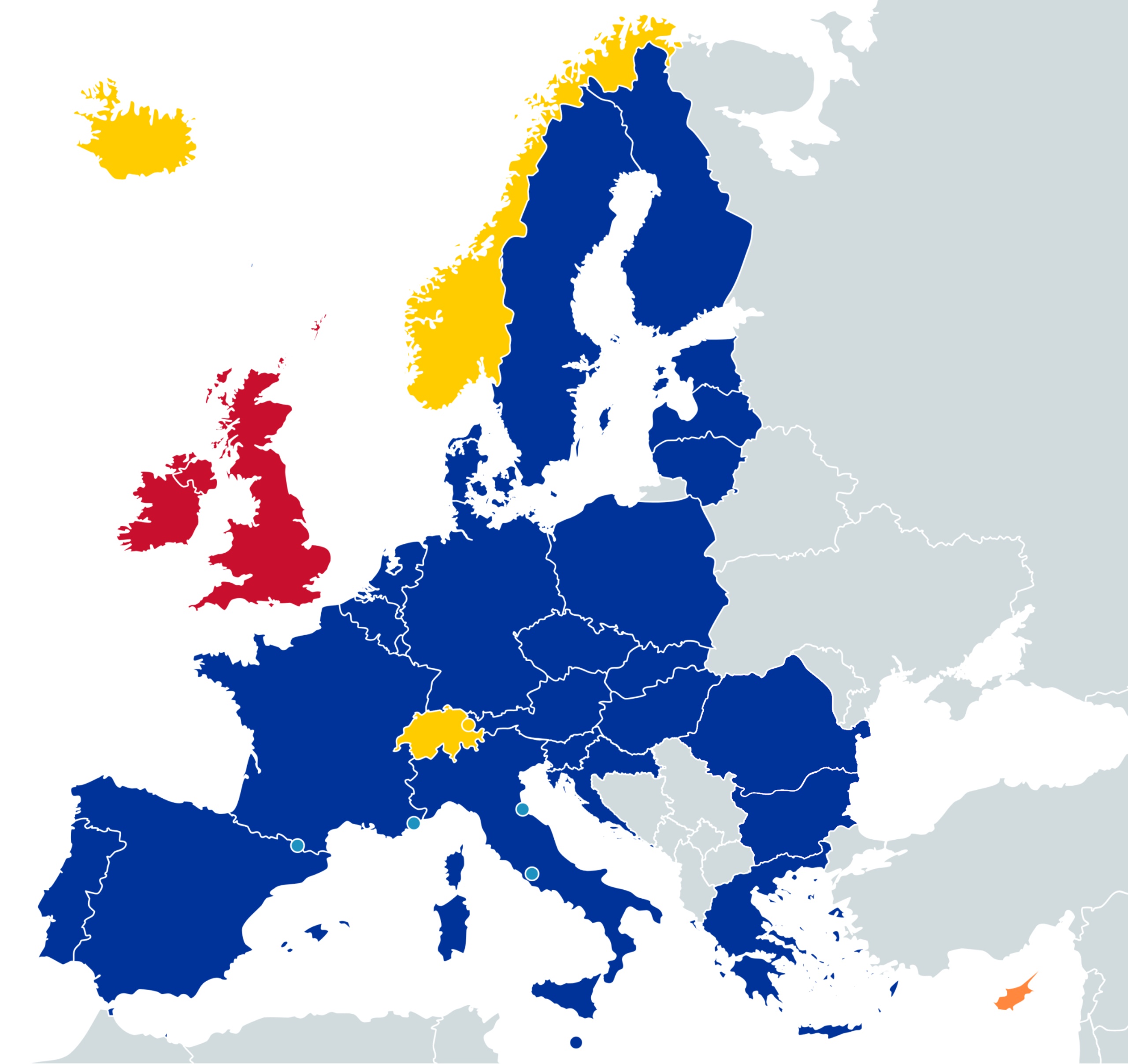
The Schengen Zone is a group of European countries that have agreed to remove routine border checks between one another, making travel across much of Europe simple and seamless. Although most Schengen countries are members of the European Union (EU), the two are not the same. Some EU countries are outside the Schengen Area, while several non-EU countries have joined the agreement through separate association treaties.
Today, the Schengen Area includes Austria 🇦🇹, Belgium 🇧🇪, Bulgaria 🇧🇬, Croatia 🇭🇷, Czech Republic 🇨🇿, Denmark 🇩🇰, Estonia 🇪🇪, Finland 🇫🇮, France 🇫🇷, Germany 🇩🇪, Greece 🇬🇷, Hungary 🇭🇺, Iceland 🇮🇸, Italy 🇮🇹, Latvia 🇱🇻, Liechtenstein 🇱🇮, Lithuania 🇱🇹, Luxembourg 🇱🇺, Malta 🇲🇹, the Netherlands 🇳🇱, Norway 🇳🇴, Poland 🇵🇱, Portugal 🇵🇹, Romania 🇷🇴, Slovakia 🇸🇰, Slovenia 🇸🇮, Spain 🇪🇸, Sweden 🇸🇪, and Switzerland 🇨🇭. With a valid Schengen visa you can generally travel freely between these countries without undergoing additional border checks.


Is Serbia a Schengen Country?
No, Serbia is not a Schengen country. Although it is located in Southeast Europe and shares borders with Schengen countries such as Hungary, Croatia, and Romania, it is not part of the Schengen Area and has its own immigration and border control rules.
This means you must pass through passport control when traveling between Serbia and any Schengen country. The good news is that time spent in Serbia does not count toward the Schengen Area's 90-day limit within a 180-day period. For travelers exploring Europe for an extended period, Serbia can be an excellent stop without affecting their Schengen stay allowance.
How Many Schengen Countries Are There?
As of 2026, the Schengen Area consists of 29 countries. Since the agreement was signed in 1985, the zone has gradually expanded, welcoming new members over the years. Croatia joined in 2023, while Bulgaria and Romania became full Schengen members after internal land border checks were lifted.
Together, these 29 countries maintain a common external border while allowing passport-free travel across their internal borders. For travelers, knowing the current number of Schengen countries is important because every member state follows the same short-stay rules, including the 90-day limit within any 180-day period.

Is the U.K. Part of the Schengen Area?
No, the United Kingdom is not part of the Schengen Area and has never joined the agreement. Although it was previously a member of the European Union, the U.K. chose to keep its own border controls and continues to operate a separate immigration system after Brexit.
This means a Schengen visa does not allow you to enter the U.K., and a U.K. visa does not automatically grant entry into the Schengen Area. If your trip includes destinations such as London and Paris, you must meet the separate entry requirements for both the United Kingdom and the Schengen countries you plan to visit.
What Are Other European Non-Schengen Countries?
Not every European country is part of the Schengen Area. Besides the United Kingdom and Serbia, several other nations maintain their own border and immigration policies. These include Ireland, Cyprus, Albania, Bosnia and Herzegovina, Montenegro, North Macedonia, Kosovo, Ukraine, Moldova, and Belarus.
Visiting these countries requires you to follow their individual entry requirements. An important advantage for long-term travelers is that time spent in non-Schengen countries does not count toward the Schengen Area's 90-day limit within a 180-day period, making them useful destinations when planning an extended trip across Europe.


Do I Need a Visa to Travel to a Schengen Country?
Whether you need a visa to enter the Schengen Area depends on your nationality, passport, and the purpose of your visit. Some travelers must obtain a Schengen visa before departure, while citizens of visa-exempt countries can enter for short stays without a visa. Regardless of your visa status, you must meet the Schengen entry requirements at the external border.
Your passport must be valid for at least three months beyond your planned departure from the Schengen Area, have been issued within the last 10 years, and you may be asked to show proof of sufficient funds, accommodation, and a return or onward ticket. In addition, eligible visa-exempt travelers will be required to obtain an ETIAS travel authorization before traveling once the system becomes operational.
How Can SchengenWay Help Me Get to the Schengen Zone?
SchengenWay.com makes traveling to the Schengen Area easier by providing clear, reliable guidance on visas, entry requirements, and travel regulations. Whether you're applying for your first Schengen visa or planning a multi-country trip, we help you understand the rules, prepare the required documents, and avoid common mistakes that can delay or affect your application.
Beyond travel guides, we offer practical services to support your journey, including visa appointment booking, flight reservations, travel document reviews, and our Schengen 90/180-Day Calculator to help you track your permitted stay. From document checklists to personalized travel assistance, SchengenWay gives you the tools and support you need to travel to Europe with confidence.