Latvia Schengen Visa: Who Needs One, What It Costs, and How to Get Approved in 2026
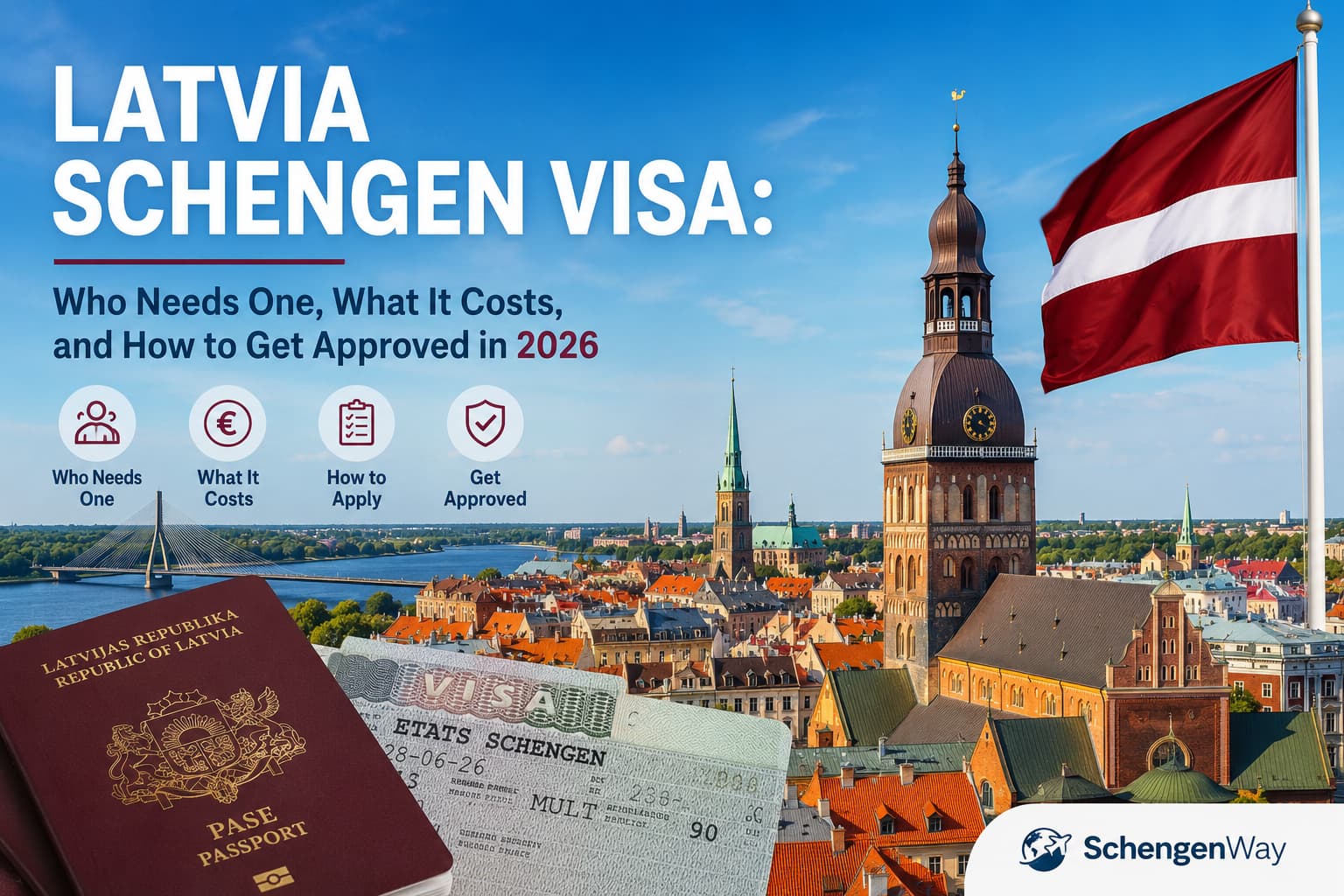
Latvia does not always make the top of people’s European travel lists. That is their loss — and quietly, it is becoming yours if you have not considered it yet. Riga’s medieval Old Town is one of the best-preserved in all of Europe. The Jurmala coastline stretches for miles of white sand along the Baltic. The food scene has gone from overlooked to genuinely exciting in the space of a few years. And unlike Paris or Rome, you can actually explore it without fighting through crowds at every turn.
But before any of that, there is one question that matters for travelers from Nigeria, India, the UAE, Pakistan, China, and dozens of other countries — do you need a Latvia Schengen visa, and if you do, how exactly do you go about getting one?
Latvia sits inside the European Union and the Schengen zone, so a Latvian short-stay visa normally lets you move across all Schengen countries during the visa’s validity. That is useful for multi-stop travel but also means your documents must meet shared Schengen standards.
This guide answers every significant question about the Latvia Schengen visa in 2026 — who needs one, what documents are required, how much it costs, how long processing takes, what the new Electronic Travel Declaration means for your trip, and specific guidance for applicants from India, Nigeria, the UAE, and other major source countries. By the time you finish reading, you will have a clear picture of exactly what your Latvia application involves.
Is Latvia in the Schengen Area?
Yes — Latvia is in the Schengen area, and understanding what that means practically changes everything about how you approach your visa application.
As a member of the European Union and Schengen Area, Latvia follows standard Schengen visa policies for international visitors. A Schengen visa issued by Latvia is valid for travel throughout all 29 Schengen member states, making it valuable for multi-country European itineraries. The visa allows stays of up to 90 days within a 180-day period for tourism, business, or family visits.
This single fact has a significant practical implication. If Latvia is your primary destination but you also plan to visit Estonia, Lithuania, Poland, Germany, or any of the other 26 Schengen members on the same trip, you do not need separate visas for each country. Your Latvia Schengen visa covers all of them — provided Latvia is genuinely the country where you spend the most time or enter first.
Conversely, if you already hold a valid Schengen visa issued by France, Germany, Spain, or any other Schengen country, you can visit Latvia on that existing visa without applying for anything additional. A Schengen visa is a zone-wide document, not a country-specific one.
Latvia uses the euro as its currency — it joined the eurozone in 2014 — so you will not need to exchange currency when moving between Latvia and other eurozone Schengen countries. This is worth knowing for budget planning, as Latvia’s cost of living is noticeably lower than Western European Schengen destinations, making your euros go further here than in France, Germany, or the Netherlands.
Who Needs a Latvia Schengen Visa?
Like we always say, your visa requirement, including for Latvia is determined entirely by your passport nationality — not where you live, not what other visas you hold, and not how long you have been resident in another country.
Many nationalities can visit Latvia without a visa for up to 90 days in a 180-day period, including citizens of the United States, Canada, Australia, Japan, and others.
The obligation to submit a declaration does not apply to citizens of Albania, Australia, Austria, Belgium, Brazil, Bulgaria, Canada, Chile, Colombia, Costa Rica, Croatia, Cyprus, Czech Republic, Denmark, Estonia, Finland, France, Germany, Greece, Hungary, Iceland, Ireland, Israel, Italy, Japan, Latvia, Liechtenstein, Lithuania, Luxembourg, Malta, Mexico, Montenegro, Netherlands, New Zealand, North Macedonia, Norway, Poland, Portugal, Romania, Slovakia, Slovenia, South Korea, Spain, Sweden, Switzerland, Turkey, United Kingdom, and United States of America.
Citizens of countries not on the visa-free list — which includes India, Nigeria, Pakistan, Bangladesh, China, and most of Africa, South Asia, and Southeast Asia — need a Latvia Schengen visa before travel. There is no visa-on-arrival option and no electronic visa alternative for most of these nationalities. The formal Schengen visa application through Latvia’s embassy, consulate, or authorized VFS Global center is the only legal pathway.
One important clarification that trips up many applicants: your country of residence does not change your visa requirement. An Indian citizen living and working in the UAE still needs a Latvia Schengen visa — their UAE residence does not exempt them. A Nigerian living in the United Kingdom still needs a Schengen visa — their UK residence permit does not cover Schengen entry. Your passport nationality is the only thing that determines what you need.
Related article>> Schengen Visa for Iceland 2026 — Who Needs One, How to Apply, and Everything Else You Need to Know
What Makes Latvia a Smart Schengen Visa Choice?
This is a question worth addressing directly because many applicants never consider Latvia as their primary Schengen visa application destination — and that is a strategic missed opportunity for some profiles.
Latvia maintains a 10.9% rejection rate, making it one of the easiest Schengen visas to obtain. With an approval rate of 89 to 92%, Latvia offers applicants an excellent gateway to European markets.
That 10.9% rejection rate compares favorably against many more popular Schengen destinations. France’s rejection rate for Nigerian applicants was approximately 44.59% in 2024. Italy’s financial bar of €120 per day makes it challenging for first-time applicants on moderate incomes. Latvia’s lower rejection rate and more accessible financial requirements make it a genuinely strategic starting point for applicants who want to build their Schengen travel history through a well-prepared first application.
Related article>> France vs Germany vs Spain – Which Schengen Embassy Approves the Most Nigerian Applications in 2026
Latvia’s financial requirements are €14 per day or €780 for longer stays — significantly lower than France, Spain, Italy, or Switzerland. For Nigerian and Indian applicants on moderate incomes who are applying for the first time, Latvia’s financial bar is one of the most accessible in the entire Schengen zone.
A successful Latvia Schengen visa application also builds the travel history that makes subsequent applications to France, Italy, Spain, or Germany considerably easier. Embassy officers reviewing applications from first-time travelers look for documented evidence that the applicant has previously respected Schengen visa conditions — and a clean Latvia entry and exit is exactly that evidence.
What Type of Latvia Schengen Visa Do You Need?
Latvia, as a Schengen member, issues the same categories of visas as every other country in the zone.
Type C — Short-Stay Schengen Visa
This is the visa the overwhelming majority of international travelers to Latvia need. The Latvia Schengen visa allows stays of up to 90 days within a 180-day period for tourism, business, or family visits. It covers tourism, visiting family or friends, attending business meetings or conferences, short-term study courses, and transit through Latvia to onward Schengen destinations.
Within Type C, you can apply for single-entry, double-entry, or multiple-entry depending on your travel plans. If you are visiting Latvia only once on this trip, single-entry is sufficient. If your itinerary involves leaving and re-entering the Schengen zone — for example, if you are combining Latvia with a non-Schengen destination like Georgia or Armenia and then returning to Europe — a multiple-entry visa gives you that flexibility.
Type A — Airport Transit Visa
Schengen visa eligibility for Latvia includes third-country nationals from certain states who are required to apply for an airport transit visa when transiting through Latvia. Most travelers do not need this — it only applies to specific high-risk nationalities transiting through Riga Airport without entering the Schengen zone itself. Check the official Latvian Ministry of Foreign Affairs website to confirm whether your nationality requires an airport transit visa before booking a connecting flight through Riga.
Type D — Long-Stay National Visa
If you plan to stay in Latvia for longer than 90 days — for example for work, study, or family reunification — you will need a long-stay D visa. The requirements are more extensive. This covers work visas, student visas, family reunification, and other purposes requiring extended residence. It is a completely different application process handled by the Latvian Office of Citizenship and Migration Affairs rather than through the standard Schengen visa channel.
Latvia’s New Electronic Travel Declaration (ETA) — What Every Traveler Must Know
This is the most significant change to Latvia’s entry requirements in recent memory and the one that most travelers arriving in 2026 are completely unprepared for.
According to amendments to Article 4.4 of the Immigration Law that came into force on September 1, 2025, third-country nationals who do not have a visa or residence permit issued by Latvia are obliged, before entering Latvia, to submit the Electronic Travel Declaration about themselves and the purpose of their travel to the State Threat Prevention Information System at eta.gov.lv.
Let me be very clear about what this means for different groups of travelers.
If you hold a Latvia Schengen visa — you do not need to submit the ETA declaration. Your visa already covers the pre-arrival information requirement.
If you are from a visa-free country — such as the US, UK, Canada, Australia, or Japan — you are required to submit the ETA declaration at least 48 hours before entering Latvia. I repeat! The ETA must be submitted at least 48 hours before entering the Republic of Latvia. The obligation does not apply to citizens of the United States, United Kingdom, Australia, Canada, Japan, and other visa-exempt countries listed specifically. Wait — this is where it gets confusing. The exemption list includes the US, UK, Australia, Canada and Japan meaning these nationalities are actually exempt from the ETA requirement. Check the full exemption list at eta.gov.lv for your specific nationality.
If you hold a Schengen visa issued by another country — for example a French or German Schengen visa — and you are traveling to Latvia on that visa, the ETA rule also covers holders of Schengen visas issued by non-Latvian authorities. This catches a significant number of travelers who assume their existing Schengen visa covers all pre-arrival requirements for every Schengen country. For Latvia specifically, if your Schengen visa was not issued by Latvia, you need to submit the ETA declaration before arrival.
How the ETA process works
Like I said, the Declaration must be submitted at least 48 hours before arrival in Latvia, including if a foreign national intends to cross Latvia in transit. Information has to be submitted on the website at eta.gov.lv. The person using the system will receive an automatic notification via email 48 hours after submitting their information, and there is no further need to wait for a separate permit.
Travelers will be required to provide essential personal details and travel information including the purpose of travel, contact details and travel itinerary including planned accommodation, information on any official or governmental positions held by the traveler or their family members, and employment details.
Looking at it critically — the Declaration is not considered an entry permit. Submitting the Declaration does not replace the need for other entry prerequisites — the presence of an appropriate valid travel document and the right to enter.
The ETA is also distinct from the incoming ETIAS system. The Latvian ETA is a purely national system that does not issue an entry authorization. The ETIAS, for its part, will be a European electronic authorization covering all 30 countries in the Schengen area intended for visa-exempt travelers, requiring online registration at a cost of €20 and valid for up to three years or until the passport expires.
What Documents Do You Need for a Latvia Schengen Visa?
Getting your documents right before you walk into any visa application center is the single most important thing you can do to protect your application. Latvia’s embassy reviews every file against a standard checklist, and an incomplete submission does not earn you a second chance at the same appointment — it earns you a delay, a request for additional documents, or a refusal.
All visa applicants must submit the following documents: a valid travel document which has been issued within the previous 10 years, contains at least two blank pages for visas, and is valid at least 3 months after the expiration date of the visa.
Here is the complete checklist for a Latvia Schengen visa Type C application in 2026:
Core documents every applicant needs regardless of purpose:
- Valid passport issued within the last 10 years, with at least two blank pages and validity of at least three months beyond your planned departure from the Schengen zone
- Completed and signed Schengen visa application form — the computer-completed application form has to be printed out, signed at the end of the application form, and submitted to the embassy. All documents required for your Latvian Schengen visa must be filled in using capital letters, completed and translated into Latvian, Russian, or English.
- One recent passport-size color photograph — 35mm x 45mm with a light background, including the entire face, without head-dress, not older than 6 months.
- Travel medical insurance covering the full duration of your stay — an insurance policy valid in Schengen countries with a coverage of at least 50,000 USD for the entire duration of stay in the Schengen area. The insurance policy should cover medical, hospital, and repatriation costs. Note that Latvia’s insurance minimum of $50,000 USD is higher than the standard Schengen €30,000. So, you need to ensure your policy explicitly meets this threshold
- Confirmed return flight reservation showing entry and exit from the Schengen zone
- Proof of accommodation for every night of your stay — hotel bookings, Airbnb confirmations, or a host invitation letter
- Cover letter explaining your purpose of visit, your travel plan, and your intention to return home
- Proof of financial means — bank statements covering the required period showing sufficient funds
For employed applicants:
- Employment letter on official company letterhead confirming your position, salary, duration of employment, and approved leave for the travel period
- Last three to six months of payslips
- Bank statements for the last three to six months showing consistent salary credits
For self-employed applicants and business owners:
- Business registration documents — CAC certificate in Nigeria, equivalent business registration in other countries
- Business bank statements for the last three to six months
- Tax returns or income assessment documents
- Business invoices or contracts demonstrating active business activity
For students:
- Enrollment confirmation letter from your educational institution
- Leave of absence or permission letter from the institution if applicable
- Proof of financial support from a parent, guardian, or sponsor
For retired applicants:
- Pension statement or proof of retirement income
- Bank statements demonstrating sufficient financial reserves for the trip
For family visit applications:
- Invitation letter from the person you are visiting in Latvia or the Schengen zone
- Proof of the host’s legal residence status — residence permit, passport copy
- Proof of your relationship with the host — family documents where applicable
Additional document for US-based applicants specifically:
You need proof of legal residence in the USA — original of valid US alien registration card (permanent residence permit, green card) or valid US resident visa. The US residence permit or visa should be valid at least three months beyond the intended departure from the territory. This requirement applies when applying through the Latvian embassy in Washington — always verify current requirements for your specific application location.
Just like any other Schengen country’s visa application requirements, you need to proof beyond reasonable doubt that you will leave Latvia before your visa becomes invalid. This is often in the form of a paid roundtrip plane ticket. Some Schengen embassies accept a flight reservation rather than a purchased ticket. Latvia’s guidance specifically references a paid roundtrip ticket — check with your specific application center whether a reservation is accepted or whether a purchased ticket is required.
Related article>> What is a Schengen Visa Flight Itinerary and How Do I Get One?
How Much Does a Latvia Schengen Visa Cost in 2026?
The visa fee for Latvia follows the standard Schengen fee schedule with one important nuance worth knowing.
Latvia Schengen visas are €90 per adult, €45 per child between the ages of 6 and 12, and free for children under 6.
However, some sources reference a different figure. The standard Latvian Schengen visa fee for an adult is €80. The discrepancy reflects the EU-wide fee increase that came into effect in mid-2024, raising the standard Schengen adult fee from €80 to €90. At the time of writing in April 2026, the confirmed standard fee is €90. Always verify the current fee directly with the Latvian embassy or VFS Global center handling your application, as fees are subject to change.
Beyond the embassy visa fee, most applicants also pay a VFS Global service charge if submitting through a VFS center rather than directly at the embassy. This service charge varies by country but typically ranges between €15 and €30 on top of the embassy fee. For Indian applicants submitting through VFS Global India, the total cost including service charge currently sits at approximately ₹12,000 to ₹22,000 depending on location and service tier selected.
Related article>> VFS Global Lagos vs VFS Global Abuja — Which Center Processes Schengen Visa Applications Faster in 2026?
Two critical points about Latvia Schengen visa fees that apply universally:
First, the fees are completely non-refundable. Please note that these fees are non-refundable in the case of visa rejection. Whether your application is approved, refused, or withdrawn after submission, you do not get the money back. This is standard across all Schengen embassies and is not unique to Latvia — but it reinforces why thorough preparation before submission matters so much.
Second, payment must be made before or at your appointment — not afterward. In most countries processing through VFS Global, payment is completed online before the appointment. Do not arrive at a VFS center expecting to pay on the day with cash. Most centers operate cashless and payment must be processed through the official portal in advance.
How Long Does Latvia Schengen Visa Processing Take?
Latvia’s concrete processing timelines are 15 to 45 days for short-stay visas and 15 to 60 days for long-stay visas.
The streamlined process through the VFS Global partnership ensures efficient application processing in 10 to 15 working days.
In reality, straightforward applications with complete documentation are often decided within 10 to 15 working days from the date your application is deemed admissible by the embassy. Complex cases, first-time applicants from high-scrutiny nationalities, or applications submitted during peak travel periods can take closer to 30 to 45 days.
Visa applications shall be submitted no earlier than 6 months before the start of the intended visit and no later than 15 calendar days before an intended trip.
That 15-day minimum is a legal boundary — but submitting just 15 days before your trip is a genuinely risky approach that leaves no room for additional document requests, processing delays, or appointment availability issues. The practical recommendation for most applicants is:
- Standard tourist or family visit applications: Submit four to six weeks before your travel date
- First-time Schengen applicants: Submit six to eight weeks before travel
- Summer season travel (June to August): Submit two to three months in advance due to higher application volumes and tighter appointment availability
During peak periods, VFS Global appointment slots for Latvia in popular cities like Lagos, New Delhi, Mumbai, and Dubai can fill up weeks in advance. Book your appointment as soon as you have confirmed your travel dates — do not wait until your documents are assembled to start looking for slots.
Step-by-Step Latvia Schengen Visa Application Process
The process involves scheduling an appointment, submitting your documents in person, providing biometric data including fingerprints, and attending an interview if required.
Here is the exact sequence in the order you actually do it:
Step 1 — Confirm you need a visa
Check your passport nationality against the Schengen visa-free list. If your country requires a Latvia Schengen visa, proceed to step two. If you are from a visa-free country, you do not need a visa for short stays — but check whether you need to submit the Latvia ETA declaration at eta.gov.lv before arrival.
Step 2 — Confirm Latvia is your primary destination
When applying for a Schengen visa with Latvia as your primary destination or first entry point if visiting multiple Schengen countries, you must apply through the Latvian embassy or consulate in your country. If another Schengen country is where you will spend the most days, apply through that country’s embassy instead. Applying to Latvia when Germany or France is your primary destination is misrepresentation and results in immediate rejection.
Related article>> What Is the First Port of Entry for a Schengen Visa?
Step 3 — Gather all required documents
Work through the complete checklist covered in the previous section. Pay particular attention to your bank statements — they must cover the required period, be officially stamped, and reflect a financial picture consistent with your employment letter and cover letter. Do not rush this stage. An incomplete document package is the leading cause of delays and rejections.
Related article>> Why Schengen Visas Get Rejected (Top 20 Reasons)
Step 4 — Complete the application form
The Latvia Schengen visa application form is available through the official Latvian Ministry of Foreign Affairs website and through VFS Global. The computer-completed application form has to be printed out, signed at the end, and submitted to the embassy. Complete every section accurately and in capital letters. Any discrepancy between what you write on the form and what your supporting documents show is a red flag.
Step 5 — Book your appointment
In most countries, Latvia processes Schengen visa applications through VFS Global. Book your appointment through the official VFS Global website for your country. During peak periods, check available dates at multiple VFS locations if your city has more than one center. Have your passport and basic application details ready before you start the booking process — slots fill quickly and you need to complete the reservation in one uninterrupted session.
Step 6 — Attend your appointment in person
The process involves submitting your documents in person and providing biometric data if this is your first Schengen application. Arrive at the VFS center at least 15 minutes before your scheduled time. Bring original documents and photocopies of each. Your fingerprints and photograph will be collected at the center. First-time applicants must attend in person — there are no exceptions for biometric collection.
Step 7 — Track your application and collect your passport
After submission, track your application status through the VFS Global tracking portal using your reference number. When a decision is made, you will be notified by SMS or email that your passport is ready. Check all visa sticker details immediately upon collection — validity dates, number of entries, and duration of stay should match what you applied for. Report any errors before leaving the center.
Related article>> How to Track your Schengen Visa Application
Latvia Schengen Visa Financial Requirements — How Much Money Do You Need to Show?
Travelers must adhere to the 90/180-day Schengen rule and provide specific financial proof, ranging from €14 per day to €780 for longer stays.
Latvia’s daily financial requirement of €14 per day is the lowest among major Schengen visa application countries. For a 10-day trip to Latvia, the minimum daily requirement translates to €140 in trip-related funds. In naira terms at current exchange rates that is approximately ₦226,000 — and in Indian rupee terms approximately ₹12,400.
However — and this is the same principle that applies at every Schengen embassy — showing exactly the minimum is not a sufficient strategy for applicants from Nigeria, India, and other countries where financial scrutiny is heightened. The daily minimum tells the officer you can technically fund the trip. What they also want to see is a consistent financial history that demonstrates stability, regular income, and genuine ties to your home country through your financial life.
The practical recommendation is to show at least double the minimum daily requirement in your account — combined with three to six months of consistent bank statement history that reflects your real financial situation rather than a balance that appeared shortly before your application.
For Nigerian applicants specifically, Latvia’s low daily requirement makes it one of the most financially accessible Schengen applications available — considerably easier to meet than Italy’s €120 per day or Switzerland’s €100 per day. This is a genuine advantage for first-time applicants whose bank balances are genuine but moderate.
For sponsored applications — where a family member or third party is covering your travel costs — the sponsor’s bank statements, sponsorship letter, proof of their legal residence, and documentation of their relationship to you must all be included in your file. The same scrutiny that applies to self-funded applications applies to the sponsor’s financial documents.
Latvia Schengen Visa for Indians — Specific Guide
Indian citizens must obtain a Schengen visa to visit Latvia. Latvia is part of the Schengen Area, and Indian passport holders are not among the visa-exempt countries.
Latvia maintains a high success rate for Indian applicants with an approval rate of 89 to 92% and an efficient processing time of 10 to 15 working days through VFS Global.
For Indian applicants, Latvia’s combination of high approval rates, low financial requirements, and efficient VFS Global processing makes it one of the most strategically sound Schengen visa choices available. Indian professionals in IT, healthcare, and business who want to explore European markets for the first time will find Latvia’s business visa particularly accessible and efficiently processed.
Where Indians apply:
Latvia processes Indian applications through VFS Global centers across India. VFS Global centers handling Latvia applications are located in Mumbai, Pune, Puducherry, Chennai, Jalandhar, Jaipur, Hyderabad, Goa, New Delhi, Kochi, Chandigarh, Ahmedabad, Kolkata, and Bengaluru.
Documents specifically important for Indian applicants:
- Employment letter on company letterhead with salary details and approved leave confirmation
- Last three months of salary slips
- Income tax returns for the last two to three years — ITR forms
- Bank statements for the last three to six months showing consistent salary credits
For self-employed: income tax returns, business bank statements, GST registration if applicable
- No-objection letter from your employer confirming you will return to your position
The ETA for Indian applicants:
Indian citizens are among those required to submit the Electronic Travel Declaration at eta.gov.lv at least 48 hours before entering Latvia. However, if you hold a valid Latvia Schengen visa, the ETA requirement does not apply to you — your visa already satisfies the pre-arrival information requirement. If you hold a Schengen visa issued by another country and are traveling to Latvia on that visa, you do need to submit the ETA declaration.
Total cost for Indian applicants:
The total application cost of approximately ₹12,000 to ₹22,000 is competitive compared to other Schengen countries. This includes the €90 embassy fee converted to rupees plus the VFS service charge applicable at your specific center.
Read full guide on the Schengen visa fees for Indians
Latvia Schengen Visa for Nigerians — Specific Guide
Nigerian applicants need a Latvia Schengen visa for any visit to Latvia regardless of travel purpose. Latvia does not offer visa-on-arrival or any alternative entry route for Nigerian passport holders.
The strategic case for Nigerian applicants choosing Latvia as their Schengen application destination is genuinely strong. Latvia’s 10.9% overall rejection rate is significantly lower than France’s rejection rate for Nigerians of approximately 44.59% and Italy’s high financial bar of €120 per day. For a first-time Nigerian applicant with genuine travel plans, a clean bank statement history, and strong employment documentation, Latvia offers one of the most accessible approval environments in the Schengen zone.
Where Nigerians apply:
Latvia processes Nigerian applications through VFS Global Nigeria. Applications can be submitted at VFS Global Lagos — located at the Purple Lekki, 2 Purple Way, Freedom Way, Lekki Phase 1, Lagos — or VFS Global Abuja located at the 3rd Floor, Sterling Bank Plaza, 1083 Mohammadu Buhari Way, Central Business District, Abuja. As we have covered in detail in our VFS Global Nigeria guide, Abuja tends to have faster appointment availability than Lagos for most Schengen embassies.
Documents specifically important for Nigerian applicants:
- Valid Nigerian passport with at least two blank pages
- Six months of bank statements — stamped and signed by your Nigerian bank
- CAC registration certificate if self-employed
- Employment letter and payslips if salaried
- Travel insurance with minimum $50,000 USD coverage — note Latvia’s higher insurance threshold
- Confirmed hotel bookings or host invitation letter
- Return flight reservation
- Cover letter explaining your travel purpose clearly and your ties to Nigeria
The ETA for Nigerian applicants:
Nigerian passport holders holding a valid Latvia Schengen visa do not need to separately submit the ETA declaration. However, Nigerians holding a Schengen visa issued by another country — France, Germany, Spain — who intend to visit Latvia on that visa must submit the ETA at eta.gov.lv at least 48 hours before entering Latvia.
Financial requirements in naira:
Latvia’s €14 per day minimum translates to approximately ₦22,600 per day at current exchange rates. For a 10-day trip, the minimum is ₦226,000 — making Latvia’s financial bar the most accessible of any popular Schengen destination for Nigerian applicants. Always show significantly more than this minimum to present a credible financial picture, but the lower threshold removes the pressure that Italy’s or France’s requirements create for moderate-income applicants.
Latvia Schengen Visa for UAE Residents — Specific Guide
The UAE situation requires the same clarification it does for every Schengen application — UAE nationals and UAE residents holding foreign passports are in completely different positions.
UAE nationals:
UAE passport holders can enter Latvia visa-free for short stays of up to 90 days within any 180-day period. They do not need a Latvia Schengen visa. However, they are subject to Latvia’s ETA declaration requirement at eta.gov.lv — check the current exemption list for UAE nationals specifically as this has been evolving since the September 2025 implementation.
UAE residents holding foreign passports:
If you are an Indian, Nigerian, Pakistani, or other non-visa-exempt nationality living and working in the UAE, your UAE residence does not exempt you from the Latvia Schengen visa requirement. Your visa requirement is determined by your passport nationality. You apply for the Latvia Schengen visa through VFS Global in Dubai or Abu Dhabi.
Key requirements for UAE-based applicants include your UAE residence visa valid for at least three months beyond your intended return date, your UAE bank statements showing financial stability in addition to or instead of home country statements, your UAE employment letter confirming your status and leave approval, and the standard Latvia Schengen visa document package.
Processing through the UAE typically follows the standard 10 to 15 working day timeline for straightforward applications.
What to Do in Latvia — Why It Is Worth the Application
Let me be honest about something. Latvia is not on most people’s radar when they think about European travel. When people picture Europe, they think Paris, Rome, Barcelona, Santorini. Latvia rarely enters the mental picture — and that is precisely what makes it worth going.
The travelers who discover Latvia tend to become quietly evangelical about it. Not in an obnoxious way. In the way that happens when you find a place that genuinely surprises you — where the reality is better than whatever expectation you walked in with.
Riga — A City That Earns Its UNESCO Status
Riga’s stunning Old Town is a UNESCO World Heritage Site and the cultural heart of the Baltics. That designation is not honorary — it reflects a medieval city center that has survived wars, Soviet occupation, and rapid modernization with its architectural integrity remarkably intact. The cobblestone streets, the Gothic church spires, the Baroque guild halls, and the Art Nouveau buildings that line Alberta Street and Elizabetes Street make Riga genuinely one of the most visually striking capital cities in Europe.
The Art Nouveau quarter deserves specific mention because it is something most visitors do not anticipate. Riga contains one of the largest concentrations of Art Nouveau architecture in the world — over 800 buildings built between 1896 and 1913, many of them elaborately decorated with sculptural facades that look like nothing else in European architecture. Walking through the quiet residential streets of the quiet Art Nouveau district feels like stepping into a design museum that someone forgot to charge admission for.
The Old Town itself takes about half a day to explore properly — the House of the Blackheads, St. Peter’s Church with its observation tower giving panoramic city views, the Latvian Occupation Museum telling the country’s Soviet and Nazi occupation history with unflinching honesty, and the Central Market housed in five former German Zeppelin hangars where Rigans still shop for food the way they have for generations.
What strikes most first-time visitors is how much Riga functions as a genuine city rather than a tourist theme park. People live here, work here, eat lunch at the market here. The tourist infrastructure is good enough to be useful without being so overwhelming that it drowns the place’s authentic character — a balance that places like Venice or Dubrovnik lost decades ago.
Jūrmala — The Baltic Riviera
Twenty minutes by train from Riga’s central station sits Jūrmala — a 33-kilometer stretch of white sand beach along the Gulf of Riga that has been the summer playground of Latvians and wealthy Russian visitors for over a century. The wooden Art Nouveau villas that line Jūrmala’s streets, many of them lovingly restored, give the resort town a distinctly nostalgic character that distinguishes it from any Mediterranean beach destination.
The beach itself is genuinely excellent — wide, clean, backed by pine forests that give the whole coastline an unexpected wildness. The water is cooler than the Mediterranean, but from June through August it is entirely swimmable and Latvians treat it with the same enthusiasm that Spaniards treat the Costa del Sol. The resort strip of Majori has decent restaurants, beach bars, and a spa culture centered on the town’s thermal baths tradition.
For non-European visitors experiencing Baltic Europe for the first time, Jūrmala provides a context for understanding Latvian life that the capital city alone cannot. This is where Latvians relax. Watching how a culture unwinds tells you a lot about who they are.
Gauja National Park — Latvia’s Adventure Playground
About an hour’s drive northeast of Riga lies Gauja National Park — Latvia’s oldest and largest national park, centered on the Gauja River valley with its sandstone cliffs, medieval castle ruins, and dense forest. The town of Sigulda at the park’s western edge serves as the base for a range of outdoor activities that make the park a genuine adventure destination regardless of season.
In summer, the park offers hiking along the river valley, kayaking and canoe trips on the Gauja, cycling through forest trails, and visits to Turaida Castle — a reconstructed medieval stronghold that gives a tangible sense of Latvia’s turbulent history under the Livonian Order. In winter, Sigulda operates a bobsled track — one of only a handful in the world — that opens to public rides and has produced Olympic-level bobsled athletes from a country of less than two million people.
The sandstone caves and cliff formations along the river valley are unlike anything most international visitors have seen elsewhere in Europe. The scale is intimate rather than dramatic — these are not the Grand Canyon — but the quality of the light through the forest canopy, the silence, and the sense of being in a landscape that has not been packaged for tourism make Gauja one of the genuinely rewarding outdoor experiences Latvia offers.
Latvian Food — Better Than You Expect
Food is not why most people put Latvia on their list. It should factor more than it does. Latvian cuisine is rooted in the same Baltic and Northern European traditions as Estonian and Lithuanian cooking — rye bread, smoked fish, dairy, root vegetables, game meat, and a seasonal reverence for what the forest provides — but Riga’s restaurant scene has evolved well beyond its traditional foundations over the last decade.
The rye bread alone is worth mentioning separately. Latvian dark rye bread — rupjmaize — is dense, slightly sour, deeply flavored, and unlike the industrial rye sold in most of the world. Riga’s Central Market bakers sell it fresh and it is one of those food experiences that makes you reconsider everything you thought you knew about bread.
The contemporary restaurant scene in Riga has earned genuine international recognition. Restaurants like Garage and Bibliotēka No1 have put Latvian cuisine in conversation with Scandinavian and New Nordic cooking traditions — using hyper-local ingredients with precision and creativity that would hold its own in any European capital. For visitors from India or Nigeria who approach European food with some skepticism about its flavor profile, Latvian cooking’s emphasis on fermentation, smoking, and bold earthy flavors tends to land better than the butter-and-cream traditions of France or the pasta-centrism of Italy.
Rundāle Palace — A Versailles in the Countryside
About 80 kilometers south of Riga, surrounded by flat agricultural land that makes its appearance all the more unexpected, sits Rundāle Palace — an 18th-century Baroque and Rococo palace complex designed by Bartolomeo Rastrelli, the same architect responsible for the Winter Palace in St. Petersburg. The interior has been meticulously restored over decades of painstaking work and the result is genuinely extraordinary — gilded staterooms, painted ceilings, and formal French gardens that have no business existing in rural Latvia and yet do, magnificently.
Rundāle is the kind of discovery that Latvia specializes in — something completely unexpected, historically significant, and experienced without the crowds that overwhelm similar sites in France or Austria. On a summer weekday you might share the palace with a handful of other visitors. The garden alone, with its clipped hedges, rose beds, and geometric patterns restored to 18th-century plans, is worth the drive from Riga.
The Latvian Song and Dance Festival
Every five years Latvia hosts its Song and Dance Festival — a tradition dating back to 1873 that involves tens of thousands of performers from across the country gathering in Riga for a week of choral singing, folk dancing, and cultural celebration on a scale that is genuinely difficult to comprehend until you are standing in the middle of it. The festival is listed as a UNESCO Intangible Cultural Heritage of Humanity and the 2028 edition will be the next opportunity for international visitors to experience it.
If your travel dates happen to align with a Song Festival year, arrange your Latvia trip around it without hesitation. Twenty thousand Latvians singing in harmony in an open-air amphitheater is one of those collective human experiences that changes your understanding of what culture means to a small nation that has spent much of its history fighting to survive.
Related article>> 10 Most Visited Schengen Countries in 2026 — Where Travelers Are Going and Why
Frequently Asked Questions
These questions come directly from real searches on Google, discussions on Reddit’s r/schengen and r/travel communities, questions posted on Quora, and threads on travel forums including TripAdvisor and Lonely Planet’s Thorntree — reflecting what international travelers from Nigeria, India, UAE, and beyond are genuinely asking about the Latvia Schengen visa.
Is it easy to get a Latvia Schengen visa?
Relatively yes — especially compared to other Schengen destinations. Latvia maintains a 10.9% rejection rate, making it one of the easiest Schengen visas to obtain with an approval rate of 89 to 92%. That does not mean preparation is optional — a poorly prepared application fails anywhere. But a well-documented, honest, complete application stands a genuinely strong chance of approval at the Latvian embassy regardless of your nationality.
Can I visit other European countries with a Latvia Schengen visa?
Yes. A Schengen visa issued by Latvia is valid for travel throughout all 29 Schengen member states, making it valuable for multi-country European itineraries. Your Latvia visa covers France, Germany, Italy, Spain, Greece, the Netherlands, and every other Schengen country for the duration of its validity, subject always to the 90-day rule across the zone combined.
What is the Latvia ETA and do I need it if I already have a Schengen visa?
The Electronic Travel Declaration is an online form that must be submitted by foreign nationals starting from September 1, 2025 for planned entry and stay in Latvia at eta.gov.lv. If you hold a valid Latvia Schengen visa, you do not need to separately submit the ETA — your visa satisfies the requirement. If you hold a Schengen visa issued by another country and are visiting Latvia on that visa, the ETA rule covers holders of Schengen visas issued by non-Latvian authorities — meaning you do need to submit the declaration at least 48 hours before arrival.
How much bank balance do I need for a Latvia Schengen visa?
Latvia requires financial proof ranging from €14 per day to €780 for longer stays. For a 10-day trip the minimum is €140 in trip funds — approximately ₦226,000 for Nigerian applicants or ₹12,400 for Indian applicants at current exchange rates. In reality, always show significantly more than this minimum. A consistent bank statement history matters as much as the closing balance figure.
Do Nigerian passport holders need a visa for Latvia?
Yes. Nigerian passport holders require a Latvia Schengen visa for any visit regardless of purpose or duration up to 90 days. There is no visa-on-arrival option for Nigerian travelers. The application is submitted through VFS Global Nigeria in Lagos or Abuja. Latvia’s low rejection rate and accessible financial requirements make it one of the more realistic Schengen options for Nigerian first-time applicants with well-prepared documentation.
How long does a Latvia Schengen visa take to process?
Processing typically takes 10 to 15 working days through VFS Global. In some cases processing can extend to 45 days for short-stay applications. Peak travel season — June through August — and first-time applicant profiles can push toward the longer end of this range. Submit your application four to six weeks before travel as a minimum, and eight weeks if you are a first-time Schengen applicant.
Can I apply for a Latvia visa online without going to an embassy?
No — not for a full Schengen visa. You can complete and print your application form online, but you must attend a VFS Global center or embassy appointment in person to submit your documents and have your biometric data collected. The process involves scheduling an appointment, submitting your documents in person, and providing biometric data including fingerprints. There is no fully online visa application route for the Latvia Schengen visa for most nationalities.
What is the difference between Latvia’s ETA and ETIAS?
They are two completely separate systems that often get confused with each other. The Latvian ETA is a purely national system specific to entry into Latvia, focused on collecting personal and travel data — it does not grant an entry authorization. ETIAS is a European-wide electronic authorization covering all 30 Schengen Area countries, intended for visa-exempt travelers, requiring online registration at a cost of €20 and valid for up to three years. The ETA applies now — since September 2025 — while ETIAS is expected to launch in late 2026. They serve different purposes and target different groups of travelers.
Does a Latvia visa allow me to work in Latvia?
No. ETIAS does not allow you to work, study, or live in Latvia beyond 90 days — and the same restriction applies even more strictly to the standard Type C Schengen visa. Working in Latvia on a tourist or business visit visa is illegal regardless of your nationality. If you want to work in Latvia, you need a Type D long-stay visa with the appropriate work authorization obtained before travel through the Latvian Office of Citizenship and Migration Affairs.
Is Riga safe for solo travelers from Nigeria, India, and other African and Asian countries?
Latvia is generally a very safe country by European standards with low violent crime rates and a stable political environment. Riga specifically is safe for solo travelers including women traveling alone. As with any European city, normal urban awareness applies — be mindful of your belongings in crowded areas like the Central Market and Old Town during peak tourist season. The Latvian people are reserved rather than overtly friendly in the Nordic-Baltic tradition — do not mistake quietness for hostility. Once you are in a restaurant or bar or guesthouse conversation, people are genuinely warm and often curious about visitors from further afield.
Can I extend my Latvia Schengen visa once I am inside the Schengen zone?
Extensions are possible in exceptional circumstances only — medical emergencies, force majeure situations, or serious documented reasons beyond your control. Wanting to stay longer because you are enjoying Latvia is not a qualifying reason. For a detailed look at extension possibilities, requirements, and the realistic alternatives when your Schengen days are running short, read our complete guide on how to extend a Schengen visa.
What is the best time of year to visit Latvia?
Summer — June through August — is when Latvia is most alive. The days are extraordinarily long thanks to Latvia’s northern latitude, with midsummer bringing almost 18 hours of daylight and the nationwide celebration of Jāņi, the summer solstice festival, on the night of June 23rd. Riga’s outdoor café culture, Jūrmala’s beach season, and Gauja National Park’s hiking conditions are all at their best in summer. Winter — November through February — is cold, dark, and quiet, but Riga’s Christmas market is genuinely beautiful and the city takes on a different kind of atmospheric charm under snow. Spring and autumn offer milder weather and significantly thinner crowds at every major site.
What documents do I need if someone in Latvia is hosting me?
If you are visiting a friend or family member legally residing in Latvia who will host your accommodation, you need a formal invitation letter from them addressed to the Latvian embassy, a copy of their valid residence permit or Latvian ID, proof of your relationship where relevant, and their contact details. The invitation letter replaces the hotel booking requirement but does not replace any other document in the standard checklist — financial proof, insurance, flight reservations, employment documentation, and cover letter are all still required.
Before You Book That Riga Flight
Latvia will not overwhelm you with spectacle the way Rome does. It will not make you feel like you are inside a postcard the way Santorini does. What it will do — if you give it the time and the open mindedness it deserves — is show you what European travel feels like when it is not performing for you.
The visa process is manageable. The costs are lower than almost anywhere else in Schengen. The approval rates are among the best the zone offers. And on the other side of that application is a medieval city, a Baltic coastline, and a food scene that has genuinely earned its growing international reputation.
Apply properly, prepare thoroughly, and go.
If you have specific questions about your Latvia Schengen visa situation — your documents, your financial profile, your travel history, or how Latvia fits into a broader European itinerary — reach out through the SchengenWay contact page and I will give you a direct, honest answer.