
What is a Schengen Visa Flight Itinerary and How Do I Get One?
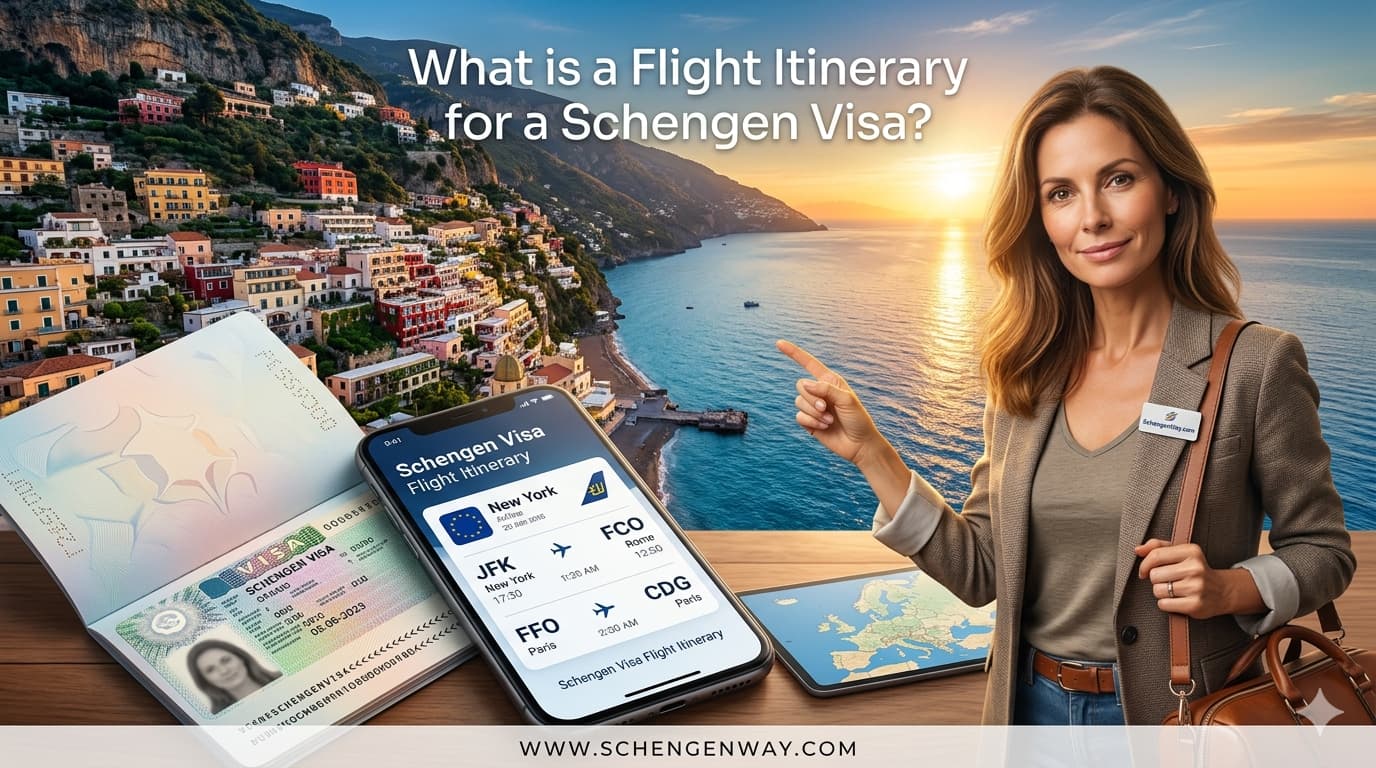
This is a conversation I have almost every time with people. People message me, and they usually sound a bit stressed about the whole visa issues. They’ve got their bank statements ready and their invitation letters signed, but then they hit a wall: “Do I really have to spend $1,200 on a flight before I even know if I’m allowed to enter the country?”
It’s a valid fear. Nobody wants to lose a month’s salary on a non-refundable ticket because a visa officer had a bad Tuesday. So, let’s clear the air. Pull up a chair, and let’s talk about how to handle your travel plans without risking your savings.
What is a flight itinerary for a Schengen visa?
When you look at the checklist for your visa application, you’ll see “Proof of Travel.” In plain English, the embassy just wants to see your plan. A flight itinerary for a Schengen visa is a document that shows the specific details of your intended flight—which airline you’re taking, the flight numbers, the dates, and the times—without necessarily being a fully paid “e-ticket.”
Think of it as a roadmap. The visa officer uses this to verify that your story holds water. If you say you’re visiting Paris for ten days, but your Schengen Visa flight itinerary shows a flight returning after five days, that’s a red flag. It’s a tool for them to confirm that you have a clear intention to enter the Schengen area and, more importantly, a clear intention to leave it. They aren’t looking for a receipt of payment; they are looking for a reservation that exists in the airline’s system.
How do I get a flight itinerary for a Schengen visa?
Getting your hands on a flight itinerary to give to people at the consulate is actually simpler than most people think, but it requires knowing where to look. You generally have three reliable paths.
First, you can talk to a travel agent. Even in the age of the internet, agents have access to Global Distribution Systems (GDS) that can hold a seat for you for a few days. They might charge a small service fee, but it’s a drop in the bucket compared to a full fare.
Second, some airlines allow you to “hold” a price or a seat directly on their website for a fee (usually around $10 to $30). This generates a legitimate reservation code (PNR) that the embassy can verify.
The third way is using specialized visa consultation services—like what AXA-Schengen does—where they coordinate with partner airlines to create a verifiable Schengen Visa flight itinerary specifically for your application window. The goal is always the same: obtaining a professional document that includes your name, the airline’s branding, and a valid reservation number.
Related articles on schengen visa:
- How To Renew Schengen Visa Before Expiry
- How to Read a Schengen Visa Sticker Number?
- What Is the First Port of Entry for a Schengen Visa?
- How to Complete Schengen Visa Application Form(The Way Consulates Expect It)
- How to Track your Schengen Visa Application
How to get flight itinerary without booking?
I get this question a lot: “Can I get the paper without actually ‘booking’ anything?” Technically, you are still “booking” a seat, but you aren’t “purchasing” it. To get a flight itinerary without booking a full-price ticket, you use what we call a “flight reservation” or a “dummy ticket.”
Now, don’t let the word “dummy” scare you—it’s not a fake piece of paper. It is a real reservation in the airline’s system that simply hasn’t been paid for yet. Most embassies actually prefer this. In fact, if you read the fine print on many consulate websites, they explicitly tell you not to buy a ticket until the visa is in your hand.
To do this, you search for services that offer “Visa Flight Reservations.” These services hold a seat in your name for a period of 7 to 14 days. You get a PDF that looks exactly like a confirmed booking, which you can then print and take to your interview. It gives the embassy the proof they need, while you keep your money safely in your bank account until you get the “Approved” stamp.
Now that we’ve covered the “why” and “how,” let’s get into the nitty-gritty of what you’ll actually be holding in your hand when you head to the consulate.
What does an airline itinerary look like?
If you’re expecting something vastly different from a standard plane ticket, you’ll be surprised. A professional Schengen Visa flight itinerary looks almost identical to the confirmation email you get after paying $1,000 on a travel site. It’s a formal document, usually on the airline’s letterhead or a recognized travel agency’s stationary.
It must include a few non-negotiable details. Your full name (exactly as it appears on your passport) needs to be front and center. It will list the flight numbers, the specific aircraft type sometimes, and the IATA airport codes—like LOS for Lagos or CDG for Paris. Most importantly, it features a PNR (Passenger Name Record) or reservation code. This is the six-digit alphanumeric string that a visa officer can type into their system to see that, yes, a seat is indeed being held for you on those specific dates.
Is a flight itinerary the same as a ticket?
In short: No. Think of the itinerary as an RSVP to a wedding, while the ticket is the actual plate of food served to you. A flight itinerary for a Schengen visa is a proposed schedule. It says, “I plan to be on these flights.” It is a reservation that hasn’t been “ticketed” yet.
A flight ticket, or an e-ticket, is only issued once the full payment is made. Once you have a ticket, you have a confirmed seat that is yours until you fly or cancel it. For visa purposes, the itinerary is usually all you need. The embassy wants to see the reservation, not the receipt. Using an itinerary instead of a ticket is the smartest way to protect your finances while still meeting every legal requirement of the Schengen code.
Can I book a flight before obtaining my visa?
You can, but the real question is: should you? As someone with experience, my answer is almost always a firm “not yet.” Most European consulates—France, Germany, and Italy especially—explicitly advise in their own guidelines that you should not purchase a non-refundable ticket until your visa is approved.
The only exception is if you are buying a “Fully Flexible” ticket. These are great because they allow for a full refund if your plans change, but they are often two or three times the price of a standard economy seat.
Unless you have money to burn, it’s much wiser to use a Schengen Visa flight itinerary for the application. Once you have the visa in your passport, you are free to go back online and book the best deal you can find, even if it’s with a different airline than the one on your initial itinerary.
A Final Piece of Advice
As you prepare your documents, remember that the flight is only half the battle. Staying legal once you’re in Europe is just as important. One of the biggest mistakes I see travelers make isn’t about the flight at all—it’s miscalculating their stay.
The “90/180 rule” is a bit of a headache; it’s a rolling window, meaning you can’t just spend 90 days in Europe and then “reset” by leaving for a day. To make your life easier, we’ve built a 90/180 rule calculator on our site. It’s the same tool many travel agents use to make sure their clients don’t accidentally overstay and catch a five-year ban.
Get your itinerary sorted, check your dates on the calculator, and you’ll be sitting in a cafe in Rome before you know it. Safe travels!