Slovenia Schengen Visa 2026 — Requirements, Fees, and How to Apply (Complete Guide)
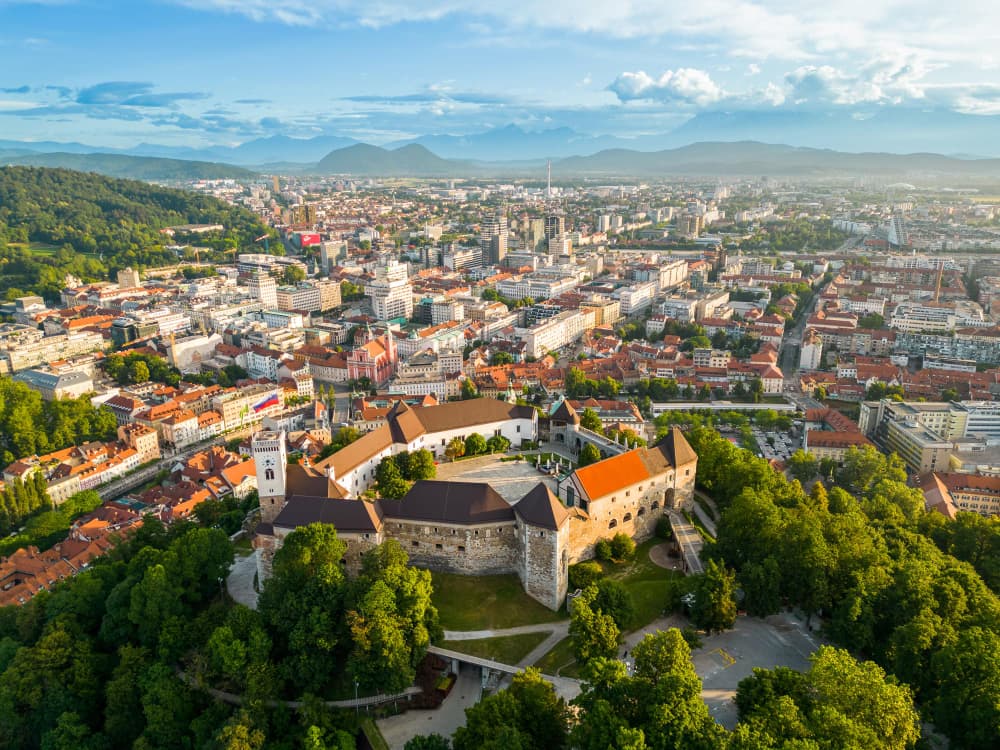
Slovenia is one of those European destinations that consistently surprises people who visit it. They arrive expecting a small country wedged between Italy, Austria, Hungary, and Croatia, and they find one of the most scenically concentrated places on the continent. Lake Bled with its island church. Triglav National Park. The Soča River valley that turns a shade of blue-green that photographs never quite capture accurately. The capital Ljubljana, compact enough to walk across in an afternoon and lively enough to fill several days.
A lot of my clients discover Slovenia almost by accident — it was never the primary plan, but it ended up being the part of the trip they talked about most when they got back. And once they decide they want to go, the first question is always the same: do I need a visa for this?
If you are reading this, there is a good chance the answer is yes. And I want to walk you through everything — not in the vague, cover-all-bases way that most visa articles do, but specifically and honestly, starting with who actually needs a Slovenia Schengen visa and ending with what a well-prepared application actually looks like.
Is Slovenia in the Schengen Area?
Yes — Slovenia has been a full member of the Schengen Area since December 21, 2007. This means two important things for your travel planning.
First, a Schengen visa issued by Slovenia covers the entire 29-country Schengen zone — not just Slovenia. If you are combining Slovenia with Austria, Italy, Croatia, or any other Schengen country on the same trip, one visa covers all of it.
Second, if you already hold a valid Schengen visa issued by any other member state — Germany, France, the Netherlands, wherever — you can enter Slovenia on that existing visa without applying for anything new. This is because the Schengen visa is zone-wide, not country-specific.
Slovenia is also a full European Union member, which is worth noting because it means EU citizens can enter using just their national ID card — no passport required.
Who Needs a Slovenia Schengen Visa?
Your requirement depends entirely on your passport nationality. Citizens of countries including the US, Canada, Australia, New Zealand, UK, Japan, South Korea, Singapore, UAE, Malaysia, Israel, Brazil, Chile, and Argentina can enter Slovenia visa-free for 90 days within any 180-day period.
Citizens of countries including China, India, Nigeria, Pakistan, Bangladesh, Ghana, and most African and Asian nations require a formal Schengen visa before travel. Citizens of over a hundred countries need a Schengen visa to enter and travel in Slovenia.
Also, your residence status does not change your visa requirement. What I mean is that, if you are a citizen of a non-EU/EEA country and reside in Ireland, you do need a Schengen visa. For those that live in Ireland, your Irish Residence Permit is essential for your application, which helps in proving your legal residence in Ireland, but it does not grant you entry into the Schengen Area. The same principle applies whether you are a Nigerian in the UK, an Indian in the UAE, or a Ghanaian in Canada — your passport nationality determines your requirement, not where you live.
One group that is entirely exempt is the third-country nationals with a valid residence permit issued by a Schengen country do not need an additional Schengen visa. If you hold a valid German or French residence permit, for example, that already allows you to travel to Slovenia without a separate visa application.
Read also>> How to Convert a Schengen Visa to a Work Permit
What Is the ETIAS and Does It Affect You?
Starting in late 2026, visa-exempt travelers will need to apply for ETIAS travel authorization before entering Slovenia for tourism, business, transit, or short medical visits.
ETIAS stands for the European Travel Information and Authorization System. It is not a visa, but it is an online pre-authorization for nationalities that are currently visa-free. If you are a citizen of a visa-free country planning a short visit to Slovenia starting in late 2026, you will need to apply for an ETIAS travel authorization before departure. Once approved, ETIAS is valid for three years or until your passport expires, whichever comes first, allowing multiple entries to Slovenia and the Schengen Area. The fee is €20 for those aged 18 to 70.
If you are from a country that requires a Schengen visa, or you already have a multiple-entry Schengen visa, you do not need to apply for an ETIAS. Your visa serves as your official permission to enter Slovenia.
So to summarize: if you need a visa — ETIAS does not apply to you. If you are currently visa-free — ETIAS applies to you from late 2026 onward. For more information , check out what ETIAS is and how to get it.
What Type of Slovenia Schengen Visa Do You Need?
Just like other Schengen countries, most travelers need a Type C short-stay Schengen visa. A Schengen visa is an entry permit for a short, temporary visit of up to 90 days in any 180-day period. A Schengen visa can be obtained in the form of a single-entry visa, which allows the holder to enter the Schengen area once, or a multiple-entry visa.
The Type C covers tourism, business meetings, family visits, conferences, and short medical consultations. Within this category, you can apply for single-entry, double-entry, or multiple-entry depending on your travel plans. The embassy decides which type to issue based on your application, your travel history, and the purpose of your visit.
For longer stays, a Long-Stay National Visa (Type D) is required — this is used for employment, long-term studies, or permanent relocation to Slovenia, and it involves a different application process with separate requirements.
In November 2025, Slovenia also introduced a digital nomad visa program allowing remote workers employed by foreign companies to reside legally for up to 12 months. This requires proof of income of approximately €3,200 per month and is a separate visa category from the standard tourist Schengen visa. If you are a remote worker considering Slovenia as a base, this is worth exploring — but it is a different process entirely from what we cover in the rest of this guide.
Read also>> The Ultimate Guide to Digital Nomad Visas in the Schengen Area
Where Do You Apply for a Slovenia Schengen Visa?
If you are planning to visit only one country, you need to apply at that member state’s embassy or consulate. If no main destination can be determined because you are traveling to several countries for the same periods of time, the member state whose external border you intend to cross first is responsible for your visa application.
If it is determined you are not applying at the correct embassy or consulate, the application will not be accepted. If you manage to get the visa issued nonetheless, there is a serious risk that you will be refused entry at the border.
Now — Slovenia is a relatively small country and does not maintain embassies or consulates in every country globally. In countries where Slovenia has no official representation, it has entrusted other Schengen states to receive and handle its visa applications. For example, if you are applying for a visa for Slovenia from South Africa, you will need to submit your application at the German embassy located in Cape Town.
VFS Global processes visa applications on behalf of the Ministry of Foreign Affairs of the Republic of Slovenia in many countries. For UK applicants, VFS Global has locations in London, Manchester, and Edinburgh where biometric data is collected during an in-person appointment. For Irish residents, Slovenia’s visa applications are handled by the Austrian Embassy in Dublin.
The practical step here is to check the official Slovenian Ministry of Foreign Affairs website to confirm the correct application point for your specific country before booking any appointment. Do not assume VFS Global handles your country or that a specific embassy represents Slovenia where you are — verify it directly.
When Should You Apply?
Timing matters significantly — more than most applicants account for when they start planning.
Your visa application can be submitted six months at the earliest and 15 days at the latest prior to your departure date.
The 15-day minimum is a legal boundary, not a recommendation. Submitting that close to your travel date leaves zero room for anything to go wrong — and things do go wrong. A missing stamp on a bank statement, an appointment slot that was not available when you expected it to be, an additional document request from the embassy — any of these can push your decision past your travel date.
Get working on your visa application as soon as possible and submit your file six to eight weeks prior to your scheduled departure date. This will give you time to manage any hiccups such as mistakes in your form, missing information, or additional documents required.
For summer travel — June through August — apply three to four months in advance. VFS Global appointment slots for Slovenia book out within seconds of release in some markets. The system releases slots unpredictably — sometimes at 2 AM, sometimes midday — with no published schedule. This is not an exaggeration. Appointment availability is one of the most consistently reported frustrations in the 2026 Slovenia visa process, particularly for UK-based applicants.
How Much Does a Slovenia Schengen Visa Cost?
The standard Slovenia Schengen visa fee is €90, with children aged six to twelve paying €45 and children under six paying nothing.
Note that some older sources still cite €80 as the adult fee — that reflects the pre-2024 rate before the EU-wide revision. The confirmed standard fee in 2026 is €90 for adults.
Some nationalities pay a reduced rate. Reduced fee countries include Albania, Armenia, Azerbaijan, Belarus, Bosnia and Herzegovina, Georgia, North Macedonia, Moldova, Montenegro, Serbia, and Ukraine, who pay €35.
The total mandatory cost for UK applicants is approximately €121.03, which includes the €90 visa fee and the €31.03 VFS Global service fee. This does not include the cost of travel insurance or optional services. Service charges vary by country — check your specific VFS Global center for the current fee before your appointment.
Two things that apply universally and should be understood clearly before you submit: visa fees are non-refundable even if the visa application is denied. In countries where the Slovenian government has entrusted private visa centers with their visa application procedures, you will also need to pay an additional non-refundable service fee.
What Documents Do You Need for a Slovenia Schengen Visa?
Getting your document package right before you walk into any visa application center is everything. A missing document does not get you a second attempt at the same appointment — it gets you a delay or a refusal and a non-refundable fee you will not get back.
Here is the complete breakdown of required documents:
Passport
The passport must be issued less than ten years prior to your application, valid more than three months after your scheduled date of departure from the Schengen area, and must include a minimum of two blank pages. So, I advise you check all three conditions before you begin gathering any other document.
Application form
Depending on your home country, you will either download an application form or complete it online when processed via a private visa center. Every section must be completed accurately. Use your passport name exactly as shown — no nicknames or variations. Double-check dates, passport numbers, and contact information. Errors discovered at the appointment delay processing while the form is corrected. If you are confused on how to complete the form, check out our guide on how to complete or fill a Schengen visa application form.
Photograph
One recent ICAO-compliant passport photograph — white background, taken within the last six months, full face visible, no glasses, 35mm by 45mm.
Travel insurance
Travel insurance is mandatory for all Schengen countries. All Schengen visa applicants must hold travel medical insurance valid across the entire Schengen Area. The policy must cover at least €30,000 in medical expenses, including emergency hospital treatment, repatriation, and medical evacuation. Coverage must span the entire duration of the planned stay. If you go for a policy that covers only Slovenia but excludes other Schengen countries, or one that does not explicitly state the €30,000 minimum, your application will be flagged during document review.
Flight reservation
You also need a confirmed return or onward flight reservation showing your entry into and exit from the Schengen zone.
Accommodation proof
Hotel bookings, Airbnb confirmations, or a formal invitation letter from a host in Slovenia covering every night of your stay. If staying with a host, the letter must include their full name, address, contact details, and a copy of their Slovenian passport or residence permit.
Financial proof
You also need to get your bank statements for the last three to six months, officially stamped and signed by the bank. The statements must demonstrate that you have sufficient funds to cover your entire stay. For Nigerian applicants specifically, downloaded internet banking statements are not accepted — you need officially printed, bank-stamped statements. For a full breakdown of what financial proof actually convinces embassy officers, our Schengen visa bank statement requirements guide covers every detail.
Employment documentation
You need to get your employment letter from the company you work with. And it must be on the company’s official letterhead, confirming your role, salary, length of service, and approved leave. Also include your last three months payslips. For self-employed applicants, make sure to have your business registration documents, business bank statements, and income tax returns.
Proof of purpose
This documents should explain why you are going. If you are going for tourism: show your travel itinerary. For business: an invitation from the company you are meeting is okay. For family visits: evidence of your relationship with the host will suffice. For medical visits: a local medical report from a doctor in your home country verifying you need treatment in Slovenia, a medical attestation from a Slovenian hospital confirming your appointment, and any correspondence between your local doctor and the Slovenian medical institution.
Cover letter
This should be written by you, specifically describing your trip, your daily plan, your financial arrangements, and your reasons for returning home. If you submit a generic cover letter, it is very easy to spot and it will do nothing for your application. But a specific, honest cover letters that describe your actual trip will help get your visa approved.
How to Apply for a Slovenia Schengen Visa — Step by Step
The application sequence matters and skipping or rushing any step creates problems downstream.
Step 1 — Confirm you need a visa and identify the correct application point
Check your passport nationality, confirm Slovenia is your primary Schengen destination, and find the correct embassy, consulate, or VFS Global center for your country through the official Slovenian Ministry of Foreign Affairs website.
Step 2 — Assemble your complete document package first
Do not book your appointment and then start gathering documents. Collect everything, check every date for consistency across your flight, hotel, insurance, and cover letter, and verify that your bank statement matches your employment letter. Only when everything is consistent and complete should you proceed.
Step 3 — Book your appointment
Through the official VFS Global portal or directly through the relevant embassy or consulate. Have your details ready before you open the booking page — slots disappear quickly in high-demand markets. If you don’t know how to book appointment, you can contact us to do it on your behalf.
Step 4 — Complete your application form
The form is available for download from the official Slovenian government website or you can complete it online through some visa center portals depending on your country.
Step 5 — Attend your appointment in person
All Schengen Zone visa applications must be submitted by the applicant in person. Bring original documents and clean photocopies of each. Do not staple anything. At your appointment, a visa agent will verify your documents and record your biometric data including fingerprints and photo. Children under age 12 are exempt from biometrics but must still attend the appointment.
Step 6 — Pay your fees and keep your receipt
Both the embassy visa fee and any applicable service charge.
Step 7 — Track and collect
Once your application has been examined, you will be informed by text, email, or phone and will be asked to come to recover your passport. If your visa is granted, a visa sticker will feature on your passport. If your visa is denied, a document will be enclosed explaining the reasons why and how you can appeal the decision.
When you collect your passport, check every detail on the visa sticker before leaving — validity dates, number of permitted entries, and maximum duration of stay. Report any errors immediately.
How Long Does a Slovenia Schengen Visa Take to Process?
The standard processing times for Slovenia visas are 15 calendar days for short-term Schengen visas. This period may be extended to up to 45 days if additional scrutiny or further documentation is required, and in exceptional circumstances up to 60 days.
The 15-day clock starts from the date your complete application is received and deemed admissible by the embassy — not from your appointment date. If documents are missing or need clarification, the clock effectively pauses while the issue is resolved.
In practical terms, you need to apply six to eight weeks before travel as a minimum. For peak summer travel, apply three to four months ahead. For first-time Schengen applicants from higher-scrutiny nationalities, allow more time rather than less.
Is Slovenia Easy to Get a Schengen Visa From?
Slovenia does not have the highest rejection rate in the Schengen zone — countries like Malta at 38.5% are considerably stricter. Slovenia’s consular approach is thorough but consistent, and well-prepared applications from genuine travelers with solid documentation move through the process reliably.
What I have consistently found is that the applications that fail do not fail because of arbitrary decisions. They fail because of avoidable preparation errors: bank statements without official stamps, cover letters that are clearly copied from templates, accommodation booking dates that do not match flight reservations, or insurance policies that do not meet the €30,000 coverage requirement.
Avoid those mistakes and your application stands on its own merits.
Common Mistakes That Get Slovenia Visa Applications Rejected
From what I see across the applications we review at SchengenWay, these are the errors that consistently cause problems:
- Submitting an IRP card or residence document that does not meet the three-month validity requirement is a frequent reason for refusal.
- Bank statements that are not recent or do not show a consistent source of income raise red flags.
- Purchasing insurance that does not cover the entire Schengen Area or does not meet the minimum €30,000 coverage is another consistent problem.
- Forgetting to sign the printed application form in the designated fields causes immediate delays.
- Submitting photos that are old, the wrong size, or have a colored background rounds out the most frequent document errors.
Beyond these specific document errors, the most consistent pattern behind rejections is inconsistency between documents. Your flight dates, hotel dates, insurance dates, and cover letter dates all need to tell the same story. When they do not, it creates doubt — and doubt at a Schengen embassy almost always resolves toward refusal.
Can I Travel to Other Schengen Countries With a Slovenia Visa?
Yes. A Slovenia Schengen visa covers all 29 Schengen member states for the duration of its validity, subject always to the 90-day rule. France, Germany, Italy, Austria, Switzerland, Greece — all of them are accessible on the same visa.
The condition that always applies: Slovenia must genuinely be your primary destination. If Germany is where you spend most of your trip, apply through Germany. Using a Slovenia visa when your actual primary destination is another Schengen country is misrepresentation and results in rejection or border entry issues.
Before any multi-country Schengen trip, track your day count using our Schengen 90/180-Day Rule Calculator to confirm you are traveling within your legal allowance.
What Happens if My Slovenia Visa Is Rejected?
If you are denied, you will receive a written explanation of the reason. You may appeal the decision through the consulate’s appeals procedure or address the issues raised and submit a new application.
Read the refusal letter carefully before doing anything else. The specific reason matters enormously — because reapplying without addressing the actual problem gets the same result, wastes another non-refundable fee, and adds a second rejection to your application history.
Most rejections from Slovenia’s embassy are based on documentary issues that are fixable. Address the specific reason, rebuild the weak parts of your application, and a properly prepared reapplication has a genuine chance of success. For the complete breakdown of rejection reasons and how to address each one, our guide on why Schengen visas get rejected covers everything relevant to Slovenia applications.
How We Can Help at SchengenWay Travels
Slovenia is a genuinely rewarding destination that rewards the traveler who makes the effort to get there. Lake Bled really is as beautiful as the photographs suggest. The Slovenian capital Ljubljana is one of the most liveable city centers in Europe. And the whole country is compact enough to see properly in ten days to two weeks — which fits perfectly within the Type C Schengen visa’s 90-day allowance.
The application process is manageable when you approach it correctly — with the right timing, the right documents, and the right level of care in how those documents are prepared and presented.
At SchengenWay Travels, we support applicants at every stage of this process. Whether you are applying for a Slovenia Schengen visa for the first time, dealing with a previous rejection, or simply want professional eyes on your document package before it reaches an embassy — we are here for all of it. Our services include:
- Schengen visa appointment booking — securing slots at VFS Global and embassy centers before they disappear
- Full document review — checking your complete file for inconsistencies, missing documents, and preparation errors before submission
- Visa application assistance — guiding you through every step from form completion to final submission
- Hotel and flight reservations — providing the confirmed bookings your application requires
- Schengen student visa processing — dedicated support for student visa applications
- Refusal appeal and reapplication handling — if you have been rejected, we help you understand the reason and prepare a stronger reapplication
Reach us through the SchengenWay contact page or the live chat — whether you want to handle the application yourself with guidance or want us to manage it professionally on your behalf.