The Schengen Visa Is Going Digital — Here Is Everything Changing by 2030
If you have ever sat in a VFS Global waiting room for three hours, surrendered your passport for two weeks while your visa was being processed, or watched a visa sticker get damaged in your passport and wondered whether it would cause problems at the border — this article is going to interest you.
The European Union has officially approved a plan to completely overhaul how Schengen visas work. Not tweak them. Not add a new form. Overhaul them. The physical visa sticker that has been the symbol of international travel permission for decades is on its way out. The in-person document submission queues are being replaced with an online platform. Your visa, if approved, will no longer be a sticker in your passport — it will be a digital barcode you can print or display on your phone.
This is not a rumor or a leak. It is official EU policy, approved by both the European Parliament and the Council of the European Union. The only thing still developing is the platform itself — and when it is ready, the Schengen visa process as most travelers currently know it will look fundamentally different.
Related article>> How To Renew Schengen Visa Before Expiry
What Is Actually Happening and Why
The new visa rules will modernise, simplify, and harmonise the visa procedures through digitalisation. This will benefit both the third country nationals applying for a Schengen visa and the EU Member States processing these requests, by streamlining visa applications and lessening costs for applicants and issuing authorities.
The current system processes over 11 million Schengen visa applications every year. Each one involves physical paperwork, in-person appointments, biometric collection, document scanning, passport retention, and a sticker being physically applied to a passport page at the end. It is a process built for a different era — and the EU has finally decided to build something better.
The driving forces behind the change are threefold.
- Efficiency — the current process is slow, inconsistent across countries, and expensive to run at scale.
- Security — visa stickers present more risks than a digital visa, including falsification, fraud, and theft, despite recent additional security features. A cryptographically signed digital barcode is significantly harder to forge than a physical sticker.
- Accessibility — the EU wants applying for a Schengen visa to feel less like navigating a bureaucratic obstacle course and more like booking a flight.
When Is This Actually Happening?
This is the question I see people ask most often whenever this topic comes up — and the honest answer requires some nuance.
The platform is expected to start operating around 2030, subject to the implementation of the interoperability roadmap, allowing the necessary time for its development and for tests to be carried out.
So 2030 is the target for the platform to begin operating. But the full mandatory transition does not happen all at once. During the transition period, Schengen member states can choose whether or not to participate in the EU Visa Application Platform. The regulations state that if a member state decides it wants to join the platform, it should notify the Commission and eu-LISA. While some countries may shift to digital applications sooner, the full mandatory transition will not occur until the end of the seven-year period, around 2030.
What this means practically is that from around 2026 to 2028, individual Schengen countries can begin opting into the new system voluntarily. Some will move faster than others. By 2030, participation becomes mandatory for all 29 Schengen member states. During the transition window, you may find that applying for a applying for a German Schengen visa looks different from applying for a French one — because Germany may have joined the digital platform while France is still finalizing its migration.
It is important to know that France already tested the digital visa concept during the Paris 2024 Olympic Games, issuing tens of thousands of digital visas to athletes, journalists, and official delegations. That trial helped confirm that the technology can work in real conditions before a wider rollout.
What Is the EU Visa Application Platform?
The new system has an official name: the EU Visa Application Platform, referred to in official EU documentation as the EU VAP. The domain name will end in .europe.eu, similar to other official EU websites.
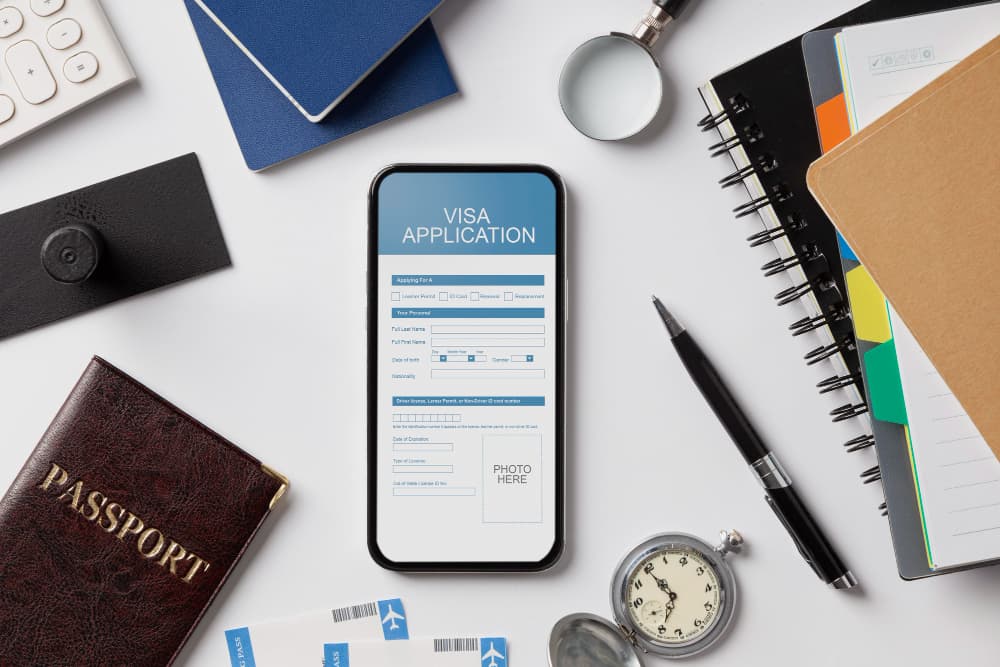
This platform will allow travellers to complete their entire visa application online. Applicants will create a secure account, fill in their details, upload documents, pay fees, and follow the progress of their application in real time.
The platform does something else that is genuinely significant for multi-country travelers: the new system will automatically decide which country will process applications for those planning to visit multiple Schengen countries, although applicants can still indicate a preference for a particular country to process their application.
Anyone who has gone through the “which embassy do I apply to” question for a multi-country Schengen trip will appreciate this. The current system places the burden on the applicant to determine their primary destination and apply accordingly. The EU VAP will handle this algorithmically — you enter your travel plan and the platform routes your application to the correct country for processing.
What Happens to the Visa Sticker?
Well, forget that. It’s Gone. The physical sticker that has been pasted into passports for decades is being retired.
Visa stickers will be replaced with a cryptographically signed barcode, which can be printed or kept on a digital device.
Travellers will still be able to print their visa if needed. There is no requirement to show it on a smartphone at the border, which avoids potential issues for those without digital access.
The barcode carries your visa information in a format that border officers can scan and verify instantly. The barcode will be cryptographically signed by the Country Signing Certificate Authority of the issuing member state. It will also include the visa holder’s biometric facial image and be printable.
For Nigerian applicants and others who have experienced the anxiety of a damaged or unclear visa sticker — the kind where you are at a border control wondering whether the officer is going to question whether the sticker is genuine — this is a meaningful improvement. A cryptographic barcode is either valid or it is not. There is no ambiguity, no fading, no peeling, and no room for the kind of low-level forgery that physical stickers occasionally attract.
Will You Still Have to Visit a Visa Center in Person?
Mostly no — but not entirely.
In most cases, physical visits to the consulate will no longer be required except for first-time applicants, individuals with expired biometric data, or those with a new travel document.
Let me break that down because it matters significantly depending on where you are in your visa application history.
If you are applying for a Schengen visa for the very first time, you will still need to visit a center — but only to register your passport and have your biometrics collected. Applicants for a Schengen visa will need to present themselves at the consulate to enrol their biometric data or renew them after five years or when they apply with a new travel document. Otherwise, EU visa applicants will be able to enter all the relevant data, upload electronic copies of their travel documents, and pay their visa fees directly on the future EU visa application online platform.
For returning applicants whose biometric data is already on file and whose passport has not changed since their last visit — the entire process can be completed online with no center visit required. No queue. No half-day appointment. No leaving your passport at a counter and waiting for a text message.
For Nigerian applicants specifically, this is a significant quality-of-life improvement. The VFS Global appointment process in Lagos and Abuja — booking slots weeks in advance, arriving early, submitting physical documents, waiting for passport return — all of that becomes largely unnecessary for repeat applicants whose biometrics are already registered.
What Happens to Your Passport During Processing?
Under the new system, you will no longer need to surrender your passport while your application is being processed.
This is one of the changes that will matter most to frequent travelers and business professionals who have experienced the inconvenience of being without their passport for two or three weeks during peak processing periods. The passport stays with you. Your documents are uploaded digitally. The decision comes back to you through the platform.
How Will Visa Fees Be Paid?
Applicants will digitally submit information and documents and pay government fees on the platform. Electronic payment details will not be part of the VIS system. If electronic payment is unavailable, visa fees can still be collected manually at consulates.
The shift to online payment removes the cash and bank transfer complications that currently create friction at some application centers. However, the backup provision — fees can still be collected manually where needed — ensures that applicants without digital payment access are not excluded from the process entirely.
Does This Change the Documents You Need to Submit?
The digitalization is a change to the process, not the requirements. At this stage, it does not appear that government fees, time frames, or document requirements will change.
So, you will still need to demonstrate financial sufficiency, provide accommodation proof, show a return travel itinerary, and meet all the same eligibility criteria that exist today. What changes is how you submit those documents — digitally rather than in person — not what those documents need to show.
All supporting documents, if not already digital, will be submitted individually in digital format such as PDF, either by scanning or taking clear photos with a smartphone.
For Nigerian applicants, this means the bank statement still needs to be officially stamped and signed by your bank. The employment letter still needs to be on official letterhead. The cover letter still needs to be specific and honest about your travel plans. The requirements do not relax because the submission method changes. What changes is that instead of printing everything and handing a folder across a counter, you scan or photograph each document and upload it through your platform account.
Will This Help Prevent Visa Fraud?
Yes — and infact, this is one of the least-discussed benefits of the digitalization plan.
The current system’s vulnerabilities are well documented. Like I already mentioned, the physical visa stickers can be removed, transferred, or counterfeited with varying degrees of sophistication. Documents submitted in paper form are harder to cross-reference in real time against multiple databases. And the decentralized nature of the current system — with each Schengen country running its own process — creates inconsistencies that bad actors can occasionally exploit.
The proposal aims to modernise, simplify, and harmonise the visa application process by digitalising the visa procedure, and to reduce risks of identity fraud, forgery, and facilitate the verification process at the border through digitalisation.
The cryptographic barcode is particularly significant from a security standpoint. Each barcode is signed by the issuing country’s certificate authority — which means any border officer with a scanner can instantly verify whether the visa is genuine, which country issued it, and whether the details match the passport being presented. The kind of physical sticker manipulation that has historically been a risk essentially becomes impossible with a properly verified cryptographic document.
This also ties directly into the broader digital border management framework the EU is building. The Entry/Exit System has already been introduced to record arrivals and departures electronically, replacing passport stamps for non-EU travellers. Another system, ETIAS, is expected to follow, requiring travel authorisation for visa-exempt visitors. Together, these systems are designed to create a more connected and data-driven approach to border management across the Schengen area.
What Does This Mean for Nigerian Applicants Right Now?
The most important thing to understand about this change is the timeline. Nothing about the way you apply for a Schengen visa changes today. The EU VAP is not operational yet. The platform is expected to start operating around 2030, and it will take several years to implement fully.
So, for Nigerian applicants applying for Schengen visas in 2026 — whether for Germany, France, Italy, Spain, Greece, or any other destination — the current process applies in full. VFS Global appointments in Lagos and Abuja, official stamped bank statements, employment letters, cover letters, travel insurance, and everything else covered in our existing guides remains the correct framework for your application today.
What this development does tell you is the direction things are moving — and it is worth understanding so you are not caught off guard when individual Schengen countries begin transitioning to the new platform during the 2026 to 2028 window. When Germany or France announces that applications for their country are now being processed through the EU VAP rather than VFS Global, you will know what that means and what to expect.
It also reinforces something we talk about consistently at SchengenWay: the EU is investing heavily in making its border management systems smarter, more connected, and harder to deceive. The EES is already recording every entry and exit digitally. ETIAS is coming for visa-exempt travelers. And now the visa application process itself is moving to a centralized digital platform. The overall direction is toward a system where every applicant’s history, biometrics, and document submissions are part of a permanent, cross-referenced digital record.
That means the importance of submitting honest, accurate, complete applications only increases as these systems mature. If you want to understand what embassies currently look for and how they detect document inconsistencies, our article on how embassies detect fake documents is worth reading before your next application.
Conclusion
Digitalization is genuinely good news for travelers — particularly those who apply frequently and currently endure the repetitive friction of in-person appointments, passport surrender, and physical document handling. The system being built is faster, more secure, and more accessible than what exists today.
But it is worth being clear about what it does not change. The fundamental scrutiny embassies apply to applications does not decrease because the process goes online. If anything, a centralized digital platform with cross-referenced data makes it easier, not harder, for reviewers to spot inconsistencies between applications from the same person over time.
A strong application is still built on genuine financial history, honest documentation, a specific and credible travel purpose, and clear ties to your home country. Those things were true in 2016. They are true in 2026. They will be true in 2030 when the EU VAP goes live.
If you are preparing a Schengen visa application now and want to make sure your documents are in the best possible shape before you submit, our complete Schengen visa requirements guide covers every document category in detail — and our team is available through the SchengenWay contact page if you want professional eyes on your file before it reaches an embassy.
The system is changing. But, the standard for what a good application looks like is not.