

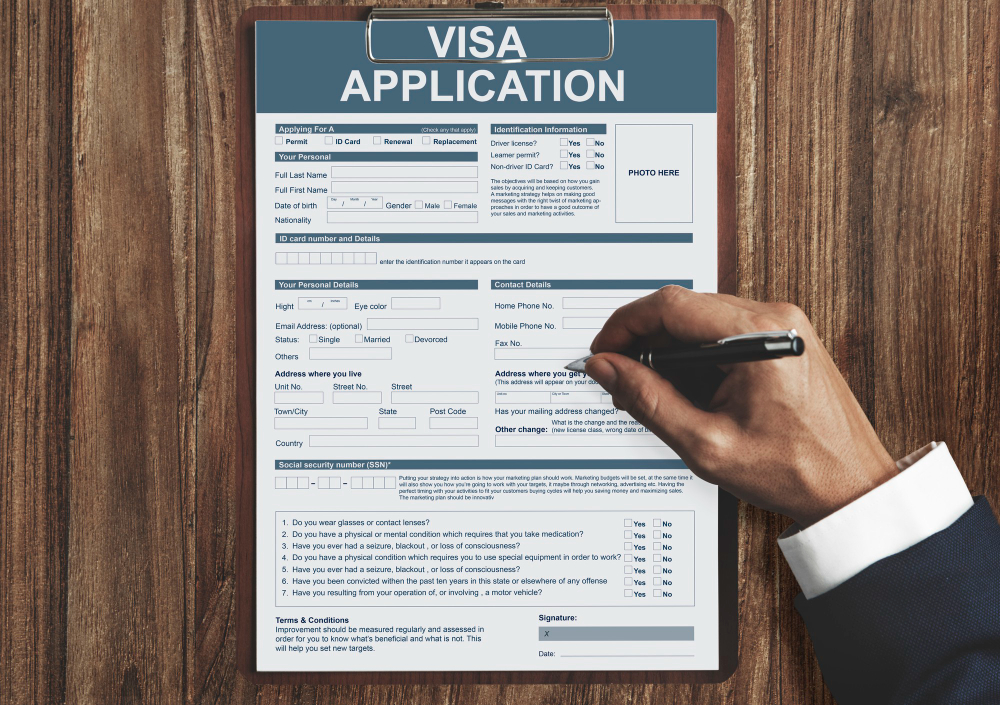
Most people don’t get rejected because they “don’t qualify.”
They get rejected because of this form.
Not because it’s complicated — but because it’s unforgiving.
I’ve watched very intelligent people lose a visa over small things: mismatched dates, guessing answers, copying what a friend wrote, or rushing through it like it’s a job application. The Schengen Visa Application Form doesn’t work like that. It’s less about impressing anyone and more about consistency, clarity, and honesty.
Before we touch a single question, you need to understand what this form is and how it’s read.
What the Schengen Visa Actually Is (And Why This Form Matters So Much)
The Schengen visa gives you access to multiple European countries under one travel zone known as the Schengen Area. Once you’re inside, internal borders don’t matter much. But getting in is where the scrutiny happens.
If you’re not a citizen of the EU or a Schengen country, the visa officer doesn’t know you.
The form is how they “meet” you.
They won’t call you.
They won’t ask follow-up questions.
They’ll judge what you submit.
So when people ask me, “Is the form really that important?”
Yes. It sets the tone for everything else — your bank statement, your invitation letter, even your travel insurance.
Understanding the Schengen Visa Application Form Before You Fill It
The Schengen Visa Application Form is standardized. That’s important.
Whether you’re applying through France, Germany, Spain, or Italy, the structure is the same. Around 32 to 40 questions, depending on the version and country. Same logic. Same traps.
It asks about:
- Who you are
- Where you’re going
- Why you’re going
- How you’ll fund the trip
- And whether your story makes sense from start to finish
This is not a creative-writing exercise. It’s a consistency test.
Everything you write here must line up with:
- Your passport
- Your itinerary
- Your bank statement
- Your employer letter
- Your accommodation proof
If one thing disagrees with another, the form exposes it.
Before You Start: Gather Everything First
This is where many people already go wrong.
Don’t download the form and start typing from memory. Sit down with:
- Your passport (open it)
- Your travel itinerary (even if provisional)
- Your accommodation details
- Your employer or school details
- Any previous Schengen visa information
You’re not filling this out “from your head.”
You’re copying facts.
Also, make sure you’re using the latest version of the form for the country you’re applying to. Old versions do get rejected quietly.
Step 1: Personal Information (Questions 1–10)
This section looks easy. It’s where mistakes happen the most.
Your surname, birth surname, and first name must appear exactly as they do in your passport. Not how people call you. Not abbreviations. Not reordered names.
If your passport shows:
SURNAME: Swart
GIVEN NAMES: Franklin James
Then that’s exactly what goes into the form.
Your date, place, and country of birth must also match your passport. If your passport says “Anambra,” don’t write “Onitsha” because it sounds more precise. The visa officer compares documents — not intentions.
For nationality, list all nationalities you currently hold. If you’ve ever held another nationality but no longer do, don’t include it unless the form specifically asks for it.
Your marital status should be factual, not strategic. Being single isn’t a disadvantage. Lying about being married is.
If You’re Applying for a Minor
Question 10 is not decorative. Parents often rush this and that causes delays.
The guardian’s information must be complete and must match the consent letter you’ll submit later. Any mismatch here creates suspicion — even if everything else is fine.
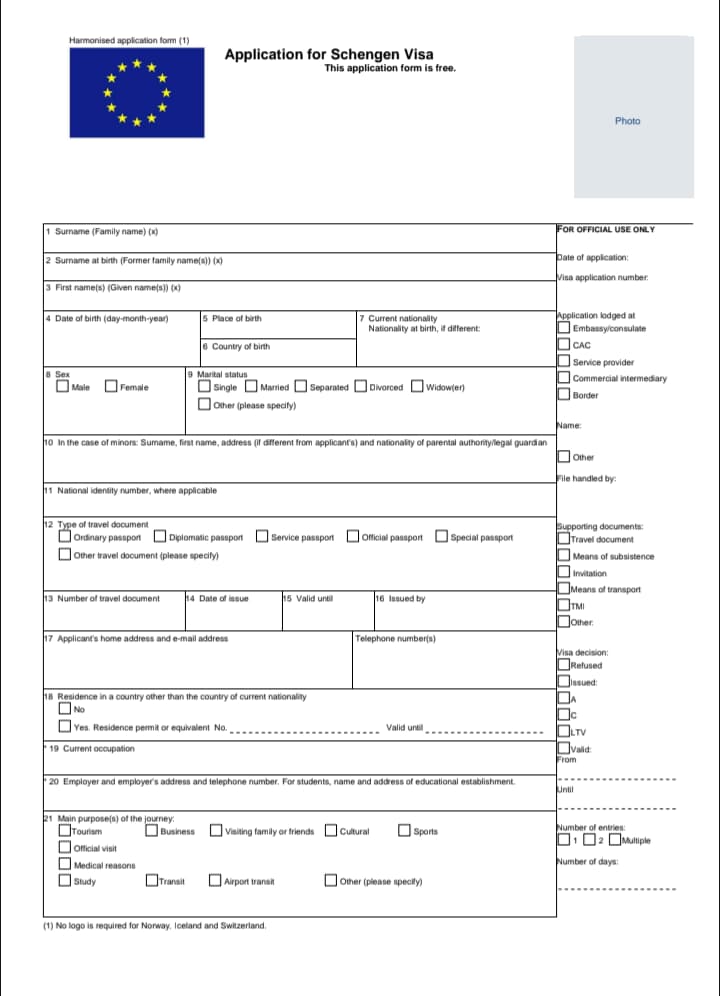
Step 2: Travel Document Details (Questions 11–18)
This is where attention matters.
Your passport number, date of issue, expiry date, and issuing authority must be copied carefully. One wrong digit is enough to cause trouble.
If you have a national ID number, include it only if your country officially issues one. Don’t invent anything to “fill space.”
Family Members in the EU or Schengen Area
Questions 17 and 18 confuse people.
Only fill this if:
- You are related to a citizen of the EU, EEA, or Switzerland
- AND that person is relevant to your trip
A distant cousin doesn’t count. A family friend doesn’t count. Writing unnecessary names here raises questions instead of helping.
Why This Part of the Form Is Quietly Evaluated
At this stage, the officer is already asking:
- Does this person read instructions?
- Do their documents agree with each other?
- Are they guessing or being precise?
You haven’t even reached your travel purpose yet, and impressions are already forming.
Contact Details and Legal Residence (Questions 19–20)
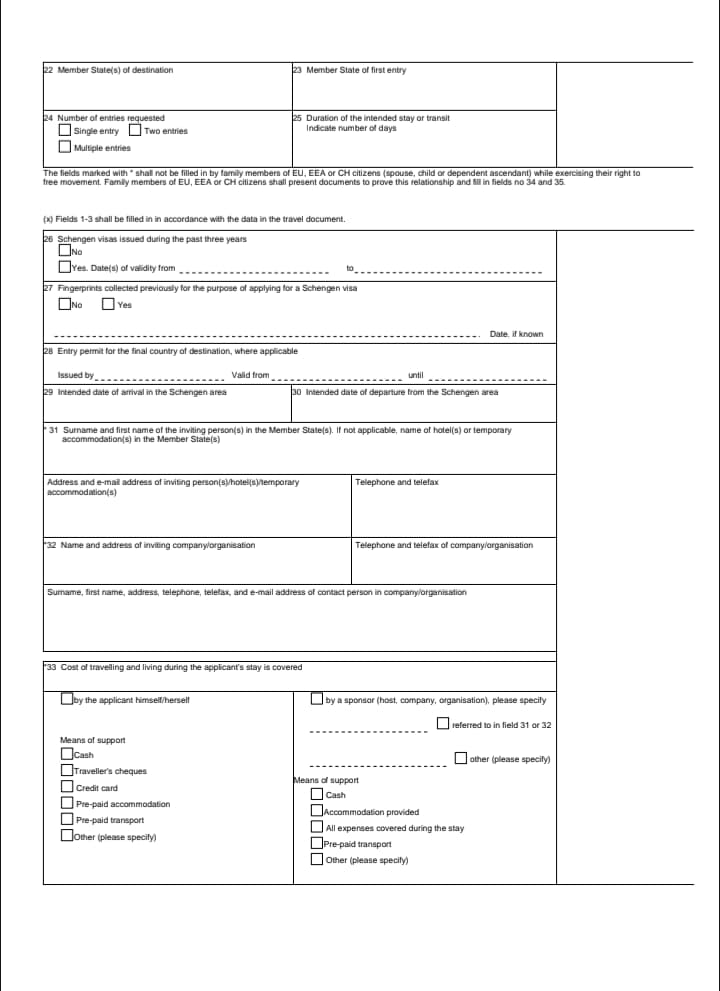
These two questions look harmless. They’re not.
Your home address, email, and telephone number must be real, reachable, and consistent with your other documents. If your bank statement shows one address and your form shows another, that’s not “minor.” That’s a red flag.
Write the address where you actually live — not a friend’s place, not a family house you moved out of years ago. If immigration ever needs to verify anything, this is where they’ll start.
Living Outside Your Country of Nationality
If you reside in a country where you are not a citizen, Question 20 becomes very important.
You must clearly state:
- Your residence permit or visa type
- The permit number
- Validity dates
If your residence status is expiring soon, that doesn’t automatically mean rejection — but hiding it almost certainly does.
Employment, Business, or School (Questions 21–22)
This is one of the most misunderstood sections of the Schengen Visa Application Form.
The visa officer is not judging your career success.
They’re assessing stability.
If You’re Employed
Write your actual job title, not an inflated one.
If you’re a “Sales Officer,” don’t write “Business Development Executive” because it sounds better. Your employer letter will expose the mismatch.
Include:
- Employer’s full name
- Physical address
- Telephone number
And yes — they do call sometimes.
If You’re Self-Employed or a Business Owner
This is where many people panic.
Don’t write vague things like:
- “Entrepreneur”
- “Online business”
- “Investor”
Be specific and boring:
- “Retail clothing business owner”
- “Freelance graphic designer”
- “Import and distribution business”
Your bank statement should reflect this story. Random inflows with no explanation weaken your application.
If You’re a Student
Use the official name of your institution and its address. This must align with your school letter.
If you’re on break or recently graduated, don’t pretend you’re still enrolled. There are proper ways to explain transitions — lying is not one of them.
Purpose of Travel (Questions 23–24): Where Most People Over-Explain
This part trips people up because they think more words equal more approval.
They don’t.
Choose the main purpose of your trip:
- Tourism
- Business
- Visiting family or friends
- Medical
- Cultural or sports event
If it’s tourism, just say tourism. You don’t need to explain your love for European architecture or childhood dreams.
If it’s business, your invitation letter will do the talking — not emotional explanations in the form.
Question 24 (additional information) is only for clarification when needed. If your purpose is straightforward, leave it clean.
Silence is better than confusion.
Countries You’re Visiting and First Point of Entry (Questions 25–26)
Now we’re getting into logic.
List all Schengen countries you plan to visit, even if you’re spending just one day in some of them. This must match your itinerary.
Your first point of entry matters because that’s usually the country responsible for processing your visa.
Here’s the rule I have always explained to my readers in my previous guides:
- Apply to the country where you’ll spend the most nights
- If nights are equal, apply to the country you enter first
If your itinerary says France → Belgium → Netherlands, but you apply through Germany, expect problems.
Number of Entries and Travel Dates (Question 27)
This question looks simple. But I am telling you that it is not as easy as you think.
Number of Entries
If you’re going once and returning home, choose single entry.
Don’t request multiple entry “just in case.” Officers don’t like unnecessary flexibility.
Multiple entry visas are usually granted when there’s a clear reason — not because someone hopes to shop around Europe.
Travel Dates
Your arrival and departure dates must align with:
- Your flight reservation
- Your accommodation booking
- Your leave approval (if employed)
Padding dates “for safety” is one of the fastest ways to create inconsistencies.
What the Officer Is Really Thinking at This Stage
By now, the officer is asking:
- Does this person have a clear reason to travel?
- Does their job allow them to return?
- Do their dates make sense?
- Is this a short, controlled trip — or something vague?
You’re not being judged emotionally.
You’re being assessed structurally.
Previous Schengen Visas and Fingerprints (Questions 28–29)
This section isn’t trying to trap you — but it will expose guessing.
Fingerprints (Question 28)
If you’ve applied for a Schengen visa in the last 59 months, your fingerprints were likely collected. That includes visas that were refused.
If you’re not sure, don’t guess the year. Check the visa sticker in your passport. There’s a code number printed on it — that’s what they’re asking for.
If you genuinely don’t remember, it’s better to say “Yes” and give an approximate date than to say “No” when the system already knows otherwise.
Lying here doesn’t help. Their database is faster than memory.
Previous Visas or Entry Permits (Question 29)
This question applies if you’ve ever been issued:
- A Schengen visa
- A residence permit
- Or a long-stay visa by a Schengen country
Again, accuracy matters more than perfection. One missing detail won’t kill an application. But a false answer might.
Inviting Person or Organization (Questions 30–31)
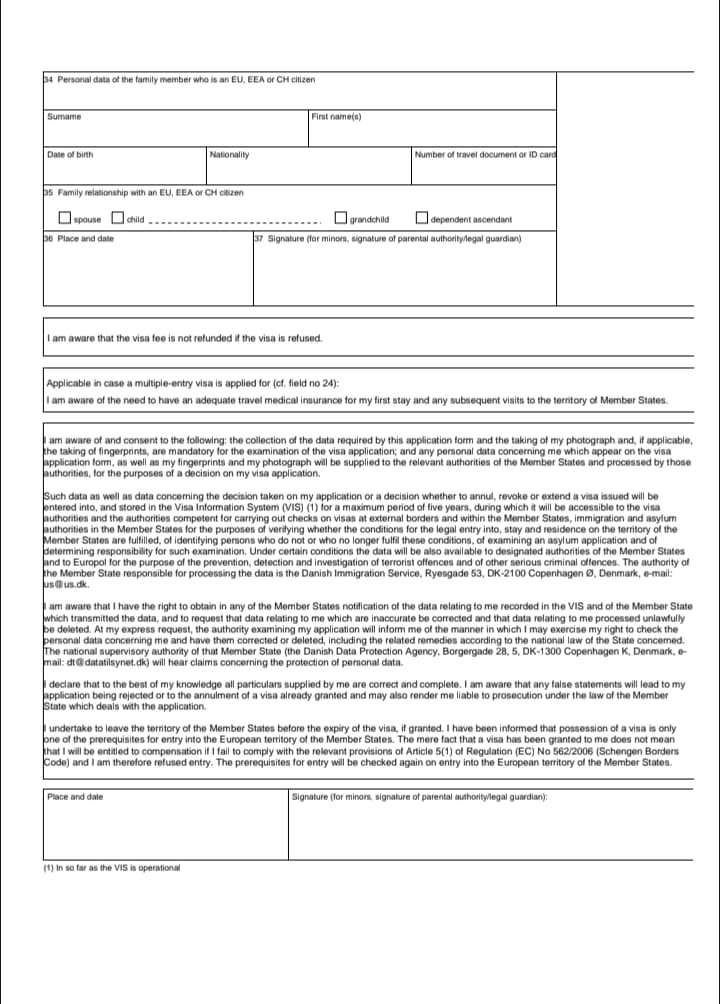
This is where many people unintentionally weaken their case.
If Someone Is Inviting You
Only fill this section if:
- You’re staying with them
- OR they’re formally sponsoring or hosting you
Their details must match:
- The invitation letter
- Their residence permit or passport copy
- The accommodation proof (if applicable)
If your friend says, “Just put my name, it’s fine,” it’s not fine unless they’ve provided proper documentation.
If a Company or Organization Is Inviting You
This is common for business, conferences, or training.
The company’s name, address, and contact details must be written exactly as they appear on the official invitation. Don’t shorten names. Don’t “clean it up.”
Financial Means of Support (Question 32)
This question is misunderstood more than almost any other part of the Schengen Visa Application Form.
They’re not asking how rich you are.
They’re asking how you will survive day to day during the trip.
Options usually include:
- Cash
- Credit card
- Traveller’s cheques
- Prepaid accommodation
- Sponsorship
Here’s where people get nervous and tick everything. Don’t.
Choose what actually applies.
If your bank statement is your main support, credit card + personal funds is enough. If someone is sponsoring you, that must be clearly supported by a sponsorship letter and bank statements — not just a ticked box.
One quiet warning from experience:
Saying “cash only” without a strong bank statement often raises more questions than answers.
The Signature Section: Where Applications Quietly Die
Before you sign, stop.
Read everything again:
- Names
- Dates
- Country sequence
- Purpose of travel
Your signature must match your passport signature. This sounds minor until it isn’t. I’ve seen applications returned just for this.
If you’re applying for a minor, the parent or legal guardian signs — not the child.
Once signed, the form becomes a declaration. Any false information can lead to refusal or future bans.
Supporting Documents: What the Form Doesn’t Forgive
The form doesn’t stand alone. It assumes your documents will back it up.
At minimum, most applicants will need:
- Flight itinerary
- Proof of accommodation
- Proof of financial means
- Travel insurance
- Employer letter or school letter
- Leave approval or no-objection letter
But here’s the part many people miss:
The form is the reference point.
If your document contradicts the form, the document loses — not the form.
Read also>> Schengen Visa Requirements for All Applicants (Master Checklist)
What I Tell Readers Right Before Submission
I usually say something like this:
“If I remove your bank statement and invitation letter, does your form still tell a clear, believable story?”
If the answer is no, something needs fixing.
The Mistakes That Quietly Get People Refused
Most refusals don’t come from dramatic errors. They come from small things that pile up.
One of the biggest is inconsistency.
Your form says you’re traveling for tourism, but your leave letter sounds like a business trip. Or your itinerary shows ten days, but your bank statement balance only realistically supports three or four.
Another common issue is overcomplication. People add extra explanations where none are needed. Visa officers aren’t suspicious by default — but unnecessary details make them start asking questions they didn’t need to ask.
Then there’s copying. Friends mean well, but their situation isn’t yours. Two people with the same passport can have completely different outcomes because their personal circumstances are different.
Read also>> Why Schengen Visas Get Rejected (Top 20 Reasons)
How Visa Officers Actually Read Your Application
This surprises people.
Visa officers don’t read your application the way you wrote it — from top to bottom. They jump around.
They look at your form.
Then your bank statement.
Then back to your form.
Then your job letter.
Then your itinerary.
They’re checking whether your story survives being shuffled.
They’re not asking, “Does this person want to travel?”
They’re asking, “Does this person make sense?”
If your Schengen Visa Application Form is clear, calm, and consistent, half the work is already done.
After Submission: What You Should (and Shouldn’t) Do
Once you submit, there’s nothing to “fix.” The form is locked in.
Don’t start rewriting your story in your head. Don’t compare timelines with friends who applied to different countries. Don’t assume silence means rejection.
Processing times vary. Some embassies move fast. Others don’t.
If you’re called for an interview or asked for additional documents, that’s not bad news. It means your application is still alive.
You should learn How to Track your Schengen Visa Application
If you’re refused, read the refusal letter calmly. Most refusals are procedural, not permanent judgments on your travel future.
Read also>> How to Fix Schengen Visa Rejection & Reapply Successfully
One Last Thing Most Guides Don’t Tell You
Filling out the form is not about proving you’re special.
It’s about proving you’re predictable.
Predictable travelers return home.
Predictable plans don’t change mid-trip.
Predictable finances don’t collapse halfway through a visit.
That’s what the form is measuring — quietly, line by line.
So when people ask me, “What’s the secret to How to Complete Schengen Visa Application Form correctly?”
There isn’t one.
Be accurate.
Be consistent.
Be honest.
And let the documents support the story — not fight it.

