
What Is the First Port of Entry for a Schengen Visa?
When people sit across from me in the office and ask about their visa plans, one question that almost always comes up is about the first port of entry. Many travelers assume it’s some complicated immigration rule that can get them into trouble if they misunderstand it. In reality, it’s a simple concept once you break it down.
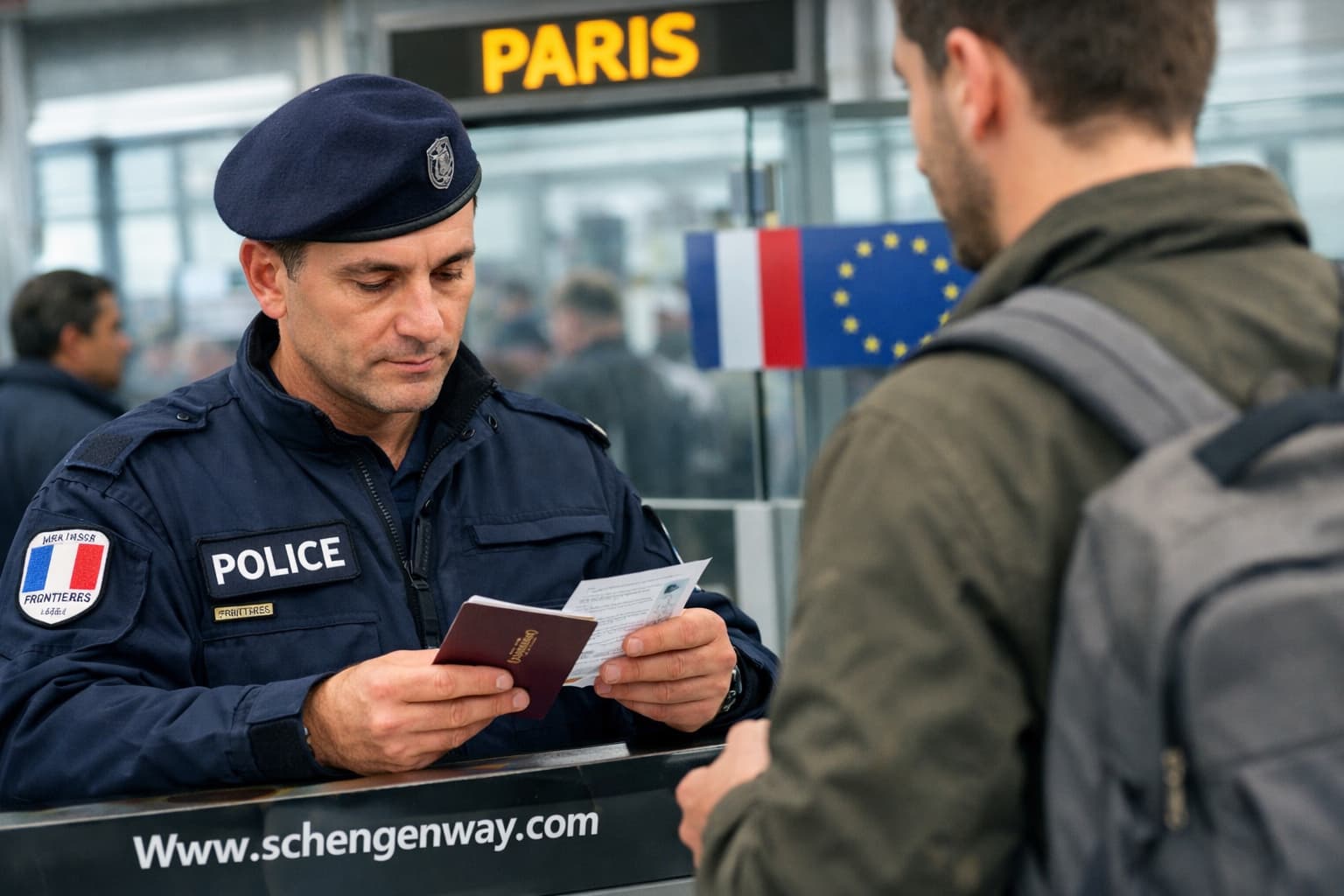
The first port of entry Schengen visa rule simply refers to the first country inside the Schengen Area where you physically arrive and pass through immigration control. That’s the airport, land border, or seaport where a Schengen immigration officer checks your passport and stamps your entry.
Let’s say your flight route is:
Lagos → Paris → Rome
Even if Rome is your final destination, your first port of entry is Paris, because that is where you will first meet Schengen border control.
The reason this matters is that the Schengen Area functions like a single travel zone. Once you pass immigration at the first entry point, you can move between other Schengen countries without going through passport control again. After entering in Paris, for example, you can continue to Italy, Germany, Spain, or anywhere else in the zone as if you were taking a domestic flight.
But the first port of entry Schengen visa concept is not about where you applied for the visa. It’s simply about where you enter the Schengen zone for the first time.
Many travelers mix this up with the “main destination rule”, which is actually the rule that determines which embassy you should apply to, not where you must land.
Here are very important guides you must read also:
- How to Track your Schengen Visa Application
- How to Complete Schengen Visa Application Form(The Way Consulates Expect It)
- How to Apply for a Germany Skilled Worker Visa: A Step-by-Step Process
Do I Have to Enter the Schengen Area Through the Country That Issued My Visa?
This is probably the most common misunderstanding about the first port of entry Schengen visa.
The short answer is no, you are not legally required to enter through the country that issued your visa.
Let me explain how this works in practice.
If a visa was issued by the embassy of a country such as:
- France
- Italy
- Spain
that visa is normally a Schengen short-stay visa (Type C). Once issued, it allows you to travel across the entire Schengen Area, which currently includes 27 European countries.
So technically, a traveler who receives a visa from France could enter the Schengen Area through:
- Germany
- Netherlands
- Belgium
and then continue their trip to France afterward.
However—and this is the important part—your travel plan should still match the reason you gave during your visa application.
When you apply for a Schengen visa, the embassy evaluates your application based on:
- your main destination
- how long you plan to stay there
- your travel itinerary
If you applied through the French embassy claiming France was your main destination, but you land in Germany and never actually go to France, that could raise questions the next time you apply.
Immigration officers at the first port of entry may also ask basic questions like:
- Where are you going?
- How long will you stay?
- Do you have proof of accommodation?
They are simply verifying that your travel story matches the visa that was issued.
So while entering through another Schengen country is allowed, your travel plan should still make sense in relation to the embassy that issued the visa.
What Are the Schengen Visa First Port of Entry Rules?
When people talk about first port of entry Schengen visa rules, they’re usually referring to a mix of actual regulations and practical expectations at the border.
The Schengen system operates under a shared border policy. Once you enter through one country, you have effectively entered them all.
But border officers at the first port of entry still have the authority to verify that you meet the entry requirements.
In practical terms, the officer may check a few things.
First, they will confirm that your visa is valid. They will look at the visa sticker in your passport and confirm:
- the visa validity dates
- number of entries
- length of stay allowed
Second, they may ask for supporting documents. This might include:
- return flight ticket
- hotel reservations
- invitation letter (if visiting someone)
- proof of funds
This does not happen to every traveler, but it is completely normal.
Third, they may confirm that the country which issued your visa actually makes sense in your travel plan. For example, if the visa was issued by Italy but your ticket shows you plan to stay entirely in Germany, you might get additional questions.
None of this means you must land in the visa-issuing country. The Schengen visa first port of entry rule is more about credibility than strict geography.
As long as your travel plans remain consistent with your application, there is usually no issue.
Can I Change My First Port of Entry Schengen Visa?
Well, this is another question that comes up a lot when people are planning flights or adjusting their travel itinerary after getting their visa.
The simple answer is yes, you can change your first port of entry after your Schengen visa has been issued. Like I mentioned earlier, a Schengen short-stay visa (Type C) allows you to enter through any external border of the Schengen Area, not just the country that issued the visa.
So if your visa was issued by Italy but the cheapest flight you find later is through Germany or Netherlands, you are still allowed to travel that route.
Airlines and border officers understand that travel plans can change. Flights get rescheduled, connections change, or travelers simply find better routes. Changing your first port of entry Schengen visa travel route by itself is not a violation of any rule.
Where travelers get into trouble is when the entire purpose of the visa changes.
For example, imagine someone applied through the embassy of Spain claiming they would spend ten days in Spain. But after receiving the visa, they completely change the trip and spend the entire time in France instead.
That is where questions may come up in future visa applications.
The Schengen system works on what is called the “main destination principle.” The embassy that processes your application is supposed to be the country where:
- you will stay the longest, or
- the main purpose of the trip takes place.
If your trip still follows that logic, then changing your first port of entry is not a problem.
In practice, travelers often enter through major international hubs such as:
- Paris
- Amsterdam
- Frankfurt
These cities receive large numbers of international flights, so it’s common for travelers to land there first before continuing to their final destination inside the Schengen Area.
So yes, the first port of entry Schengen visa route can change, as long as your overall travel plan still matches the reason the visa was granted.
When Entry Port Actually Matter in Requirements for Schengen Visa
Now this is the part where the first port of entry can actually matter more than people expect.
Even though you can enter through any Schengen country, the immigration officer at the first port of entry has the authority to allow or refuse entry.
That officer is the one who decides whether you meet the conditions for entering the Schengen Area.
This is why the first port of entry Schengen visa check is sometimes stricter than people anticipate.
The officer may ask simple questions such as:
- Where are you going in Europe?
- How many days will you stay?
- Which city will you visit first?
These questions are not meant to trick you. They are simply meant to confirm that your travel plan matches your visa.
For example, if your visa was issued by France because you planned to attend an event there, but at the border you say you are actually going to live with friends in Belgium for several weeks, the officer may ask for more clarification.
Another situation where the first port of entry matters is when a traveler cannot show proof of accommodation or funds. Even if you already have a visa, entry can still be refused if the officer believes the traveler does not meet the entry conditions.
The requirements that may be checked at the first port of entry include:
- valid passport and visa
- proof of accommodation
- return ticket
- travel insurance
- proof of financial means
This is why experienced travelers always carry copies of their travel documents when arriving in the Schengen Area. Most people are waved through quickly, but it is always better to be prepared.
Another practical issue is flight routing. Many travelers from countries like Nigeria often enter Europe through major connecting hubs such as Germany or France before moving on to smaller destinations. That is perfectly normal under the Schengen system.
Like I said, what matters is that your story, documents, and visa application all align.
A Practical Way to Think About the First Port of Entry
When you strip away all the confusion, the first port of entry Schengen visa concept is simply about where you first pass through border control in the Schengen Area.
It does not lock you into entering one specific country, and it does not prevent you from changing flights or travel routes later.
But it does play an important role at the border, because the immigration officer there is the person who verifies that you are entering the Schengen Area under the same conditions that your visa was issued for.
In other words, the first port of entry is less about rules on paper and more about consistency. If your travel plan makes sense, your documents are in order, and your explanation matches the visa you received, the process is usually straightforward.
And that’s the way I usually explain it to clients sitting across the desk—keep your travel story simple, consistent, and honest, and the first port of entry rarely becomes a problem.