
Malta Schengen Visa 2026 – Everything UK and Indian Citizens Need to Know Before Applying
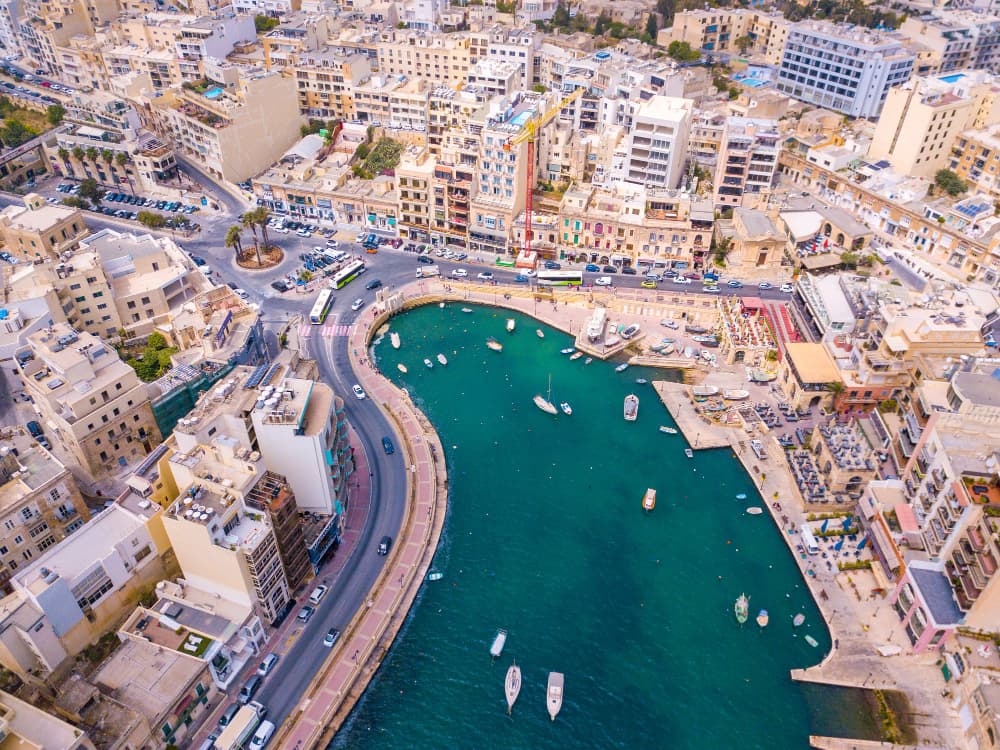
Malta is one of those places that quietly ruins you for everywhere else. It is small enough to feel intimate — the entire island is roughly 27 kilometres long — but it packs more history, culture, and raw Mediterranean beauty into that space than countries ten times its size manage in a lifetime. Valletta, the capital, became a UNESCO World Heritage Site because the whole city qualifies. The limestone architecture glows amber in the afternoon light. The water around the Blue Grotto is a shade of blue that looks digitally enhanced until you are floating in it yourself. And the food — somewhere between Italian, North African, and something entirely its own — is the kind that makes you eat past the point of comfort and feel no regret whatsoever.
Every year, a growing number of travelers from the United Kingdom and India put Malta on their list. And every year, some of them sail through the trip planning process while others get tangled in questions they should have had answered weeks earlier. Do I need a visa? Where do I apply? How much does it cost? How long does it take? What documents do they actually want?
This guide answers all of it — not in the vague, cover-everything-say-nothing way that most visa articles do, but specifically and honestly for UK and Indian travelers, with enough detail that you can sit down after reading this and know exactly what your next step is.
Let us start at the beginning.
Do UK Citizens Need a Visa for Malta?
This question gets more complicated after Brexit than most British travelers expect — and the answer depends on which British traveler you are talking about.
If you hold a British passport, the answer is no — you do not need a Schengen visa to visit Malta. British passport holders can travel to Malta visa-free for stays up to 90 days within any 180-day period, as Malta is part of the Schengen Area.
That visa-free arrangement survived Brexit because the UK negotiated reciprocal travel access with the Schengen zone — British citizens can enter Schengen countries without a visa for short stays, and EU/Schengen citizens can do the same in the UK. Malta, as a full Schengen member, is part of that arrangement.
However — and this is the part many UK-based travelers miss entirely — the visa-free access applies to British passport holders, not to everyone living in the UK.
UK residents with non-EU passports require a Malta Schengen visa. This includes Indian, Pakistani, Nigerian, or other non-EU nationals residing in the UK. UK residence status does not exempt non-EU nationals from Schengen visa requirements.
So if you are an Indian national living and working in London on a UK visa or residence permit, your UK status gives you no advantage when it comes to visiting Malta. Your Indian passport determines your entry requirement — and Indian passport holders need a Schengen visa for Malta regardless of where they live. The same applies to Pakistani, Nigerian, Bangladeshi, and other non-EU nationals based in the UK.
Another thing is that later this year, UK citizens will need ETIAS (the European Travel Information and Authorization System) — before visiting Malta and other Schengen countries. This is not a visa. It is a quick online pre-authorization that costs €20, takes about 10 minutes to complete, and is valid for three years. We have covered ETIAS in full detail in our complete ETIAS 2026 guide. I urge you to check it out and try bookmarking the page if your Malta trip falls in the second half of 2026 or beyond.
How Long Can a UK Citizen Stay in Malta Without a Visa?
British passport holders can stay in Malta for up to 90 days within any rolling 180-day period without a visa. That is the standard Schengen short-stay allowance and it applies to UK citizens the same way it applies to Americans, Canadians, Australians, and other visa-exempt nationalities.
The 90 days sounds generous until you understand how the rolling window works — and this is where British travelers frequently miscalculate.
The 90-day allowance is not 90 days per trip or 90 days per calendar year. It is 90 days within any 180-day period, and the 180-day window moves continuously rather than resetting on a fixed date. What this means practically is that if you spent 45 days traveling through France and Italy earlier this year before heading to Malta, those 45 days count against your current Schengen allowance. You would have only 45 days remaining for Malta — not a fresh 90.
This catches British travelers who make multiple European trips in the same year without tracking their cumulative Schengen days. The trips feel separate, but the 180-day window sees them as part of one continuous picture.
Also, Malta is one of 29 Schengen countries, and the 90-day allowance covers all of them combined — not 90 days per country. Days spent in France, Spain, Germany, Italy, and Malta all count toward the same pool of 90 days.
Before planning any trip to Malta that follows other recent European travel, use our Schengen 90/180-Day Rule Calculator to check exactly how many days you have remaining in your current window. It takes less than two minutes and removes all the guesswork.
Where Can I Apply for My Malta Schengen Visa?
Where you apply depends on two things — where you currently live and whether Malta is your primary Schengen destination.
Let’s talk about the destination question first: if Malta is the only Schengen country you are visiting, or the one where you will spend the most days, you apply through Malta’s diplomatic mission or its authorized representative. If you are combining Malta with, say, a week in Italy and two weeks in France, and France is where the majority of your trip is spent, you apply through the French embassy — not the Maltese one. The rule is simple: apply through the embassy of the Schengen country that will be your main destination. If the trip is split equally and there is no clear primary destination, apply through the embassy of the first Schengen country you will enter.
Now, this is where to actually find the application point for Malta:
In countries where Malta has diplomatic representation — embassies or consulates — you will need to submit your visa application at the consular services attached to your place of residence.
Malta does not have embassies in every country, which is worth knowing upfront. For countries where Malta has no direct diplomatic presence, the application is handled by another Schengen country’s embassy on Malta’s behalf — this is a common arrangement among smaller Schengen members. The official ConsularPlus website lists which embassies represent Malta’s interests in countries where it has no direct presence.
For UK-based applicants
Applications are processed through VFS Global, Malta’s visa application centre in the UK. VFS Global is the third-party company contracted by Malta to handle the front-end of visa applications — document collection, biometric recording, and fee processing — before forwarding your file to the Maltese embassy for a decision. The VFS Global UK center handles Malta applications for all nationalities residing in the UK, whether you hold a British passport needing no visa or a non-EU passport requiring one.
For India-based applicants
Indians have to apply for a Schengen visa through the VFS visa application centre in India. Indians have to take an online appointment for the visa centre. VFS Global India processes Malta Schengen visa applications across multiple cities. Before booking your appointment, check the official VFS Global website for Malta in India to confirm the current list of operating centers and which cities are currently active.
One important practical note regardless of where you are applying from — do not use any third-party booking service or agent that charges you to book a VFS appointment. The appointment booking itself is free on the official VFS Global portal. Agents can legitimately help with document preparation, but you should never pay someone just to book a slot that is freely available online.
Related Article>> Do Americans Need a Schengen Visa in 2026? Everything US Citizens Must Know Before Traveling to Europe
When Is the Best Period to Apply for a Malta Visa?
Timing your Malta Schengen visa application well is not just about giving yourself enough runway before travel — it is about understanding when Malta is busiest, when the embassy is under its heaviest processing load, and what the weather actually looks like on the ground when you arrive.
On the application timing question: applying at least 4 weeks before your travel date is recommended. However, that is the bare minimum for straightforward cases. For Indian applicants specifically, it is generally advised to apply 60 days before you travel. That two-month window accounts for appointment slot availability, document preparation time, the standard 15-day processing period, and a buffer in case the embassy requests additional documents or processing takes slightly longer than usual.
For UK-based non-EU applicants, the same 60-day rule is sensible. British passport holders do not need a visa and have no application to worry about for now — though the ETIAS requirement arriving in late 2026 will introduce a light pre-travel step for them as well.
On the question of when to actually visit Malta — which feeds into when you should be applying:
Malta sits in the central Mediterranean and has a genuinely excellent climate for most of the year. The summer months of July and August are when the island is at its most popular — the beaches are packed, the streets of Valletta are full, the ferries to Gozo have queues, and hotel prices reflect the demand. If you apply for a summer trip, apply by May at the absolute latest and ideally earlier.
The shoulder seasons — April through June and September through October — are genuinely the sweet spot. The weather is warm and reliably sunny, the sea is swimmable, the tourist crowds are thinner, and prices for accommodation are noticeably more reasonable. These are also the periods when visa processing tends to be faster because application volumes are lower.
November through February is Malta’s quieter winter period. It is still mild by northern European standards — temperatures rarely drop below 12 degrees Celsius — and the island has a different, more local character in winter that some travelers find more authentic. If you are visiting primarily for Valletta’s history, the temples, Mdina, and the food scene rather than the beaches, winter is genuinely underrated. Application processing is fastest in this period.
The one period to be most cautious about from an application timing standpoint is June through August. Malta receives an enormous proportion of its annual visitors in these three months. Embassy processing loads increase, appointment slots at VFS fill faster, and the risk of your application taking longer than the standard 15 days is highest. If your trip is planned for peak summer, submit your application no later than eight weeks before departure.
What Type of Visa Do You Need to Visit Malta?
Malta issues the same categories of visas as every other Schengen member state. For the vast majority of travelers visiting for tourism, family visits, or business, the relevant visa is a Type C short-stay Schengen visa.
Indian passport holders, regardless of their purpose of visit, must apply for and receive a Schengen Type C visa before traveling. This applies to tourism, business, or family visits.
The Type C Schengen visa allows you to stay in Malta — and across the entire Schengen zone — for up to 90 days within any 180-day period. It comes in three variations depending on your travel plans:
A single-entry visa allows you to enter the Schengen zone once. Once you exit — even if your visa is still valid — it is spent. If your Malta trip is a standalone visit with no plans to re-enter Europe, single-entry is what you need.
A double-entry visa allows two entries within the visa’s validity period. If your itinerary involves leaving the Schengen zone and re-entering — say you are combining Malta with a trip to a non-Schengen destination like Turkey or the UK and then returning to another Schengen country — double-entry covers that pattern.
A multiple-entry visa allows you to enter and exit as many times as you like within the validity period, always subject to the 90/180-day rule. Multiple entry options are available as single-entry, double-entry, or multiple-entry visas. Multiple-entry visas are typically granted to travelers with an established Schengen travel history — previous approved visas, clean entry and exit records, and a demonstrated pattern of respecting visa conditions.
Beyond the Type C tourist visa, Malta also issues Type C visas for business purposes — covering meetings, conferences, and trade activities — and Type C visas for family visits where you are staying with a Maltese resident or citizen. The visa category is the same Type C classification, but the supporting documents differ depending on the purpose.
For stays longer than 90 days — for work, study, or longer-term residence — you need a Type D national long-stay visa. This is a completely different application process handled directly by the Maltese government rather than through the standard Schengen visa channel, and the requirements are significantly more extensive. For the purposes of this guide, we are focused on the Type C short-stay visa which covers tourism and short visits.
One thing worth knowing specifically for Indian travelers: with a Malta visa, you can travel freely within the entire Schengen Area, including France, Germany, Italy, Spain, and 23 other European nations. A Malta Schengen visa is not a Malta-only document — it covers the full 29-country zone for its validity period, subject always to the 90-day rule. If you are planning a multi-country European trip with Malta as your primary destination, your Malta visa covers all the other Schengen stops on the same itinerary without any additional applications.
How Much Does a Malta Schengen Visa Cost?
Let us be straightforward about the numbers here because there are two separate fees involved and most people only budget for one of them.
The embassy visa fee — the amount that goes directly to the Maltese government — is €90 for adults and €45 for children between the ages of six and twelve. Children under six years old pay nothing. This fee structure applies uniformly across all Schengen member states following the EU-wide revision in 2024, which raised the adult fee from the previous €80.
This fee is completely non-refundable in all circumstances. It does not matter whether your application is approved, refused, or withdrawn after submission — the embassy keeps the €90. This is standard Schengen policy, not a Malta-specific rule, and it applies whether you are applying from India, the UK, or anywhere else.
The second fee is the VFS Global service charge. Since Malta processes most applications through VFS Global rather than directly at embassies, you pay VFS for handling your submission — document scanning, biometric collection, courier passport return, and administrative processing. This charge varies by country.
For Indian applicants submitting through VFS Global India, the total cost including both the embassy fee and VFS service charge typically sits between ₹9,000 and ₹15,000 depending on your city and which optional services you add — such as premium lounge access or the passport courier return service. For UK-based applicants using VFS Global in the UK, the combined total in pounds is approximately £95 to £115 at current exchange rates.
Optional premium services at VFS Global centers add further costs — the premium lounge at most India centers starts from approximately ₹3,500 extra, and the visa at your doorstep passport return service adds another ₹1,500 to ₹2,000. These are genuinely optional and not necessary for a standard application, but the premium lounge is worth considering if you have a large document package or want a calmer, less rushed submission experience.
What Are the Malta Schengen Visa Requirements?
The document requirements for a Malta Schengen visa follow the standard Schengen framework, but Malta has some specific expectations that are worth understanding clearly before you start gathering papers.
Your passport needs to be valid for at least three months beyond your planned departure date from the Schengen zone, issued within the last ten years, and have at least two blank pages available for the visa sticker and entry stamps. If your passport is close to expiry, renew it before you apply — submitting a Malta visa application with a passport that barely meets the validity requirement is an unnecessary risk.
The application form must be completed in full, printed, and signed by hand before submission. Rejections usually occur due to insufficient financial proof, incomplete applications, or weak supporting documents. An incomplete form — even a single section left blank — is grounds for the embassy to refuse processing your application entirely.
Photographs must be recent — taken within the last six months — on a white or very light background, 35mm by 45mm in size, showing your full face without glasses. The photograph gets pasted onto your application form, not stapled or pinned.
Travel insurance is mandatory and must cover the entire duration of your stay across the full Schengen zone with a minimum coverage of €30,000. This is not optional and it is not something you can submit without — your application is incomplete without valid insurance documentation. Make sure your policy explicitly states coverage in Malta and all Schengen countries, shows the validity dates matching your travel dates, and includes medical repatriation.
Flight reservation showing your entry into and exit from the Schengen zone is required. Most embassies accept a reservation rather than a purchased ticket — but verify this with VFS Global or the Maltese embassy in your country before submission, because some application points specifically request a purchased return ticket.
Accommodation proof covers every night of your stay — hotel bookings, Airbnb confirmations, or an invitation letter from a host in Malta. The accommodation details must match the dates in your cover letter and flight reservation exactly. If there is any mismatch between any of these — even a day’s difference — your documents get flagged during review.
Financial proof needs to demonstrate that you can comfortably fund your entire trip without financial stress. This means bank statements covering the last three to six months, stamped and signed by your bank. Malta does not publish a specific daily rate requirement — financial sufficiency is assessed case by case — but as a working benchmark, having the equivalent of €100 per day of your stay in accessible funds is a reasonable standard. The consistency of your statement history matters as much as the closing balance. A steady growing balance over six months is more convincing than a large deposit that appeared three weeks before your application.
For employed applicants specifically, you need an employment letter on official company letterhead — signed, stamped, and dated — that confirms your position, your salary, your length of service, and that your employer has granted you approved leave for the travel period. Include your last three months of payslips alongside the letter. For Indian applicants, your ITR-V — Income Tax Return Verification form — for the most recent filing year is also typically required.
For self-employed applicants, business registration documents are essential — CAC certificate for Nigerian applicants, GST registration and business registration for Indian applicants. Alongside these, submit business bank statements for the last three to six months and your income tax returns for the last two to three years. The goal is to show that your business is real, active, and generating the income your personal bank statements reflect.
For students, an enrollment confirmation from your institution, a letter granting you permission to travel during the application period, and proof of financial support from a parent or guardian if you are not self-funding.
A cover letter is the one document you write yourself, and it matters more than most applicants give it credit for. Write clearly about why you are visiting Malta, what you plan to do during your stay, where you will be staying, how you are funding the trip, and what you are returning to in your home country — your job, your business, your family, your commitments. The cover letter is where you connect all your documents into a coherent, honest story about a real planned trip. Keep it factual and specific. Vague, generic cover letters are easy for embassy officers to spot and they do nothing to strengthen your application.
For Indian applicants specifically, every bank statement submitted must be an original printed and stamped by your bank — not a downloaded PDF or a screenshot from your internet banking app. Submitted documents must be in A4 format with the bank’s official stamp and signature on each page. This is a non-negotiable requirement and one that catches Indian applicants off guard regularly.
How to Apply for a Malta Schengen Visa Step by Step
The application process for a Malta Schengen visa is sequential — each step follows the previous one, and skipping or rushing any stage creates problems further down the line.
The first thing to do — before booking appointments, before downloading forms, before anything — is to confirm that Malta is genuinely your primary Schengen destination. If you are spending four days in Italy and one day in Malta, you apply through the Italian embassy, not the Maltese one. The Malta Schengen visa application only makes sense if Malta is where you will spend the majority of your Schengen trip or where you will enter the Schengen zone first if the time is evenly split.
Once that is confirmed, start gathering your documents. Do not book your VFS appointment first. Assemble your complete document package — passport, photographs, application form, insurance, accommodation proof, flight reservation, financial statements, employment letter, cover letter — and verify that every piece of information is consistent across every document. Your travel dates must match across your flight, your hotel, your insurance, and your cover letter. Your income stated in your employment letter must match what your bank statement credits show. Your stated purpose must match your cover letter, your itinerary, and your visa type. Consistency is not a minor detail — it is the foundation of a credible application.
When your documents are ready, book your VFS appointment through the official VFS Global website for your country. Select Malta as the destination country, choose your nearest center, pick your available slot, and complete the online booking. For Indian applicants in major cities, appointment slots for Malta can fill up during peak periods — book as soon as your documents are ready rather than waiting.
At your appointment, arrive on time with your original documents and clean photocopies of each. VFS staff will conduct a preliminary document check, scan your documents, collect your biometric data — fingerprints and photograph — and process your fees. If this is your first Schengen visa application, your attendance in person is mandatory for biometric collection. If you have submitted a Schengen application within the last 59 months and your fingerprints were already collected, you may be exempt from attending in person — confirm this with VFS Global before assuming it applies to you.
After submission, track your application through the VFS Global tracking portal using your reference number. When your passport is returned, check every detail on your visa sticker before leaving the collection point — validity dates, number of permitted entries, maximum duration of stay. Any error on the sticker should be reported immediately and not after you have left.
What Is the Rejection Rate for a Malta Schengen Visa?
Malta recorded the highest refusal rate among all Schengen states in 2024 at 38.5%, meaning nearly 4 in 10 applications were not issued. Out of 45,578 applications submitted to Malta in 2024, Malta denied 16,905 of them. That is the highest rejection rate of any Schengen country — higher than Estonia’s 27.2%, Belgium’s 24.6%, and significantly higher than the Schengen average of 14.8%.
Read that again: nearly four in ten people who applied for a Malta Schengen visa in 2024 were refused.
That number deserves a proper explanation rather than being glossed over, because understanding why it is so high tells you something important about how to avoid being part of that statistic.
Smaller states like Malta reject more applications due to limited consular capacity. Malta processes a fraction of the application volume that France, Germany, or Spain handles. With smaller consular resources, the embassy applies stricter document scrutiny to the applications it does receive — there is less tolerance for borderline cases, incomplete submissions, or applications that raise any questions about the applicant’s intentions.
The nationalities with the highest rejection rates globally — Bangladesh, Pakistan, and several West African countries — face even tougher odds at Malta specifically because of this stricter-than-average review environment. Indian applicants alone contributed nearly €14 million in non-refundable visa fees lost to rejections across Schengen in 2024 — a figure that reflects both the volume of Indian applications and the real financial consequence of poorly prepared submissions.
However — and this is the context that matters — even Malta approves 4 out of 5 applications when you look at strong applicants. Strong applications succeed anywhere. The 38.5% rejection rate is an aggregate across every application Malta received — including incomplete submissions, inconsistent documents, applications from high-risk profiles, and cases where the applicant clearly had no genuine travel plan. A well-prepared, honest, consistent application from a genuine traveler with strong financial documentation and clear ties to their home country is a completely different proposition from the average that produces a 38.5% figure.
The practical implication is this: Malta requires a higher standard of preparation than most Schengen destinations. You cannot submit a mediocre application and hope it gets through. Every document needs to be complete, consistent, and clearly genuine. Your financial evidence needs to be solid. Your cover letter needs to be specific. Your ties to your home country need to be clearly established.
For Indian applicants specifically, the combination of India’s high overall Schengen rejection rate and Malta’s strict per-application scrutiny means you need to treat this application with the same seriousness you would give a job interview for a role you genuinely want. The preparation is the difference between being in the 61.5% that gets approved and the 38.5% that loses their fee with nothing to show for it.
What specifically causes Malta rejections? The same things that cause Schengen rejections generally — incomplete documentation, financial proof that does not hold up, inconsistent information across the application, weak or absent return intention evidence, previous Schengen violations, and cover letters that are either copied from the internet or so vague they tell the officer nothing useful about the applicant’s real plans. Fix all of those things before you submit and your odds improve dramatically. For the complete breakdown of every rejection reason and how to address each one, read our full guide on Why Schengen Visas Get Rejected and How to Fix Each Reason — it covers everything that applies directly to your Malta application.
Before You Start Packing for Valletta
Here is the honest advice I give every client who comes to me planning a Malta trip from the UK or India: do not let the 38.5% rejection rate scare you away from applying, but do let it scare you into preparing properly.
Malta is genuinely worth the effort. The walled city of Valletta, the Azure Window’s replacement in terms of natural drama — the Blue Grotto and the cliffs of Dingli — the quiet villages of Gozo across the channel, the Knight’s history that seems to be layered into every building and street — this is a destination that rewards the traveler who makes the effort to get there.
The rejection rate is high because too many people approach the application carelessly. Be the person who does not. Give yourself six to eight weeks minimum before your trip. Build your document package carefully and check every date, every figure, and every claim for consistency. Write a cover letter that is specific to your actual plans — not borrowed from a template. Show financial history that reflects genuine stability over time rather than a balance manufactured for the application.
And before you finalize any itinerary that combines Malta with other European countries, check how your days add up across the entire Schengen zone. The 90/180-day rule applies to all 29 Schengen countries combined — Malta days, Italy days, France days, all of them count toward the same pool. Use our Schengen 90/180-Day Rule Calculator to map your days before you book anything non-refundable. It is a free tool, it takes two minutes, and it removes one of the most common and most avoidable mistakes European travelers make.
Malta is small enough to feel like a discovery. Go there feeling like you earned it — because with the right preparation, you absolutely will.
If you have questions about your specific application situation — your financial profile, your document package, or how Malta fits into a broader European itinerary — reach out through the comment section and we will point you in the right direction.
Related Articles on SchengenWay
- France vs Germany vs Spain — Which Schengen Embassy Approves the Most Nigerian Applications?
- Liechtenstein Schengen Visa 2026 — Requirements, Fees, and How to Apply (Complete Guide)
- How to Fix Schengen Visa Rejection & Reapply Successfully
- How to Travel Multiple Schengen Countries Without Violating the 90-Day Rule