

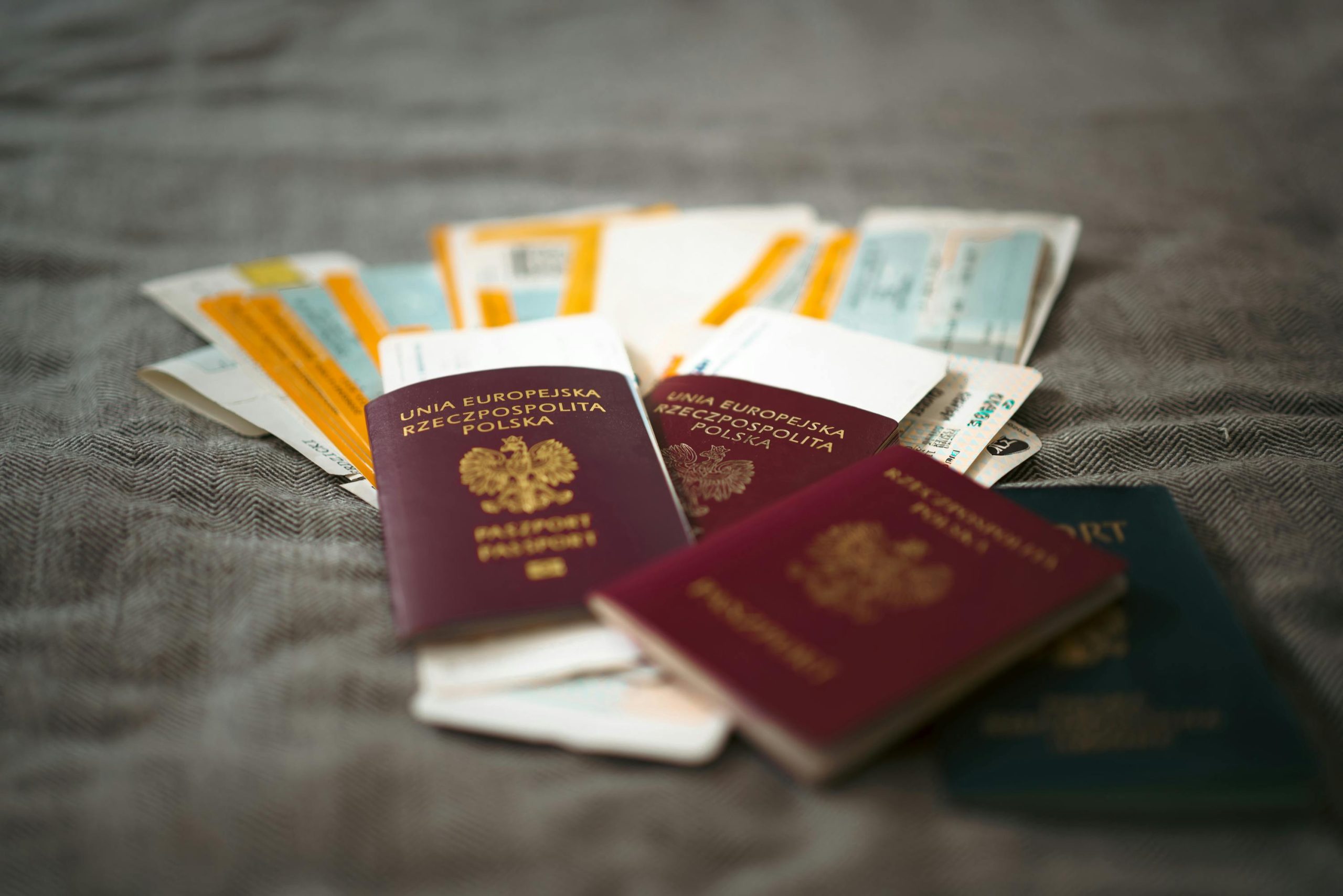
Poland doesn’t usually come up first when people think of Europe. Paris gets the Instagram posts, Italy gets the food blogs, and Spain gets the beach crowd. But Poland? Poland quietly sits in the heart of Central Europe with medieval old towns, some of the most affordable cities on the continent, and direct access to the rest of the Schengen Area once you’re in. And that last part is actually the whole point.
When you get a Schengen visa for Poland, you’re not just getting access to Warsaw and Kraków. You’re getting a single document that opens the door to 26 other European countries — Germany, France, the Netherlands, Greece, and more — all without a separate visa for each one. That’s the real value most people miss when they start researching this process.
Now here’s the thing about applying for a Poland Schengen visa that nobody really tells you upfront: it’s not complicated, but it punishes people who don’t prepare. The embassy doesn’t need your life story — it needs specific documents, organized in a specific way, submitted at the right time. If you miss a step, believe me – you’re looking at a rejection, a wasted visa fee, and starting all over again.
I’ve helped a lot of people navigate this process through my contents, and the ones who run into trouble are almost always the ones who either left things too late, underestimated the financial documentation side, or didn’t understand exactly which documents are non-negotiable. This guide walks you through every part of it — from figuring out whether you actually need a visa in the first place, all the way through to what happens after you submit your application.
So, if you’re planning a tourist trip, a business visit, attending a family event, or just want to use Poland as your entry point for a broader European trip, everything you need to know is in this guide. Let’s get into it.
Meanwhile, you can check out:
- How to Apply for a Czech Republic Schengen Visa
- How to Apply for a Portugal Schengen Visa
- How to Apply for a Denmark Schengen Visa
- How to Get an Estonia Schengen Visa in 2026
Do I Need a Schengen Visa for Poland?
This is always the first question people ask, and I’ve always maintained that the answer depends entirely on your nationality.
Poland is a full member of the Schengen Area, which means its borders operate under the same rules as every other Schengen country. The question of whether you need a visa isn’t decided by Poland alone — it’s governed by EU law, which divides the world’s nationalities into two categories: those who can enter the Schengen Area visa-free for short stays, and those who need to apply for a visa before they travel.
If you hold a passport from the United States, Canada, the United Kingdom, Australia, New Zealand, Japan, South Korea, or most of Latin America, you do not need a Schengen visa for short stays in Poland. You can enter, stay for up to 90 days within any 180-day period, and travel freely across all Schengen countries — no visa required. That said, there is one important update to be aware of: the EU’s new Entry/Exit System (EES) went live in April 2026, and it now digitally records every entry and exit by non-EU nationals across the Schengen Area. This means the 90/180-day rule is now automatically tracked by a live system, not just passport stamps. Overstaying is immediately visible to border authorities.
If you hold a passport from countries like India, Pakistan, Nigeria, Ghana, Bangladesh, the Philippines, Russia, China, or most of Africa and South/Southeast Asia, you will need to apply for a Schengen visa before you can enter Poland or any other Schengen country. This is what this guide is primarily about.
If you’re unsure where your nationality falls, the safest thing to do is check the official Polish Ministry of Foreign Affairs website or contact the nearest Polish embassy or consulate. The list of visa-exempt countries is set at the EU level and does get updated from time to time.
And one more thing: if you already hold a valid residence permit or long-stay visa issued by another Schengen country, you may be able to enter Poland without a separate Polish visa. The same applies if you hold a valid US visa in some cases — though this is more nuanced and varies by your nationality, so always verify directly with the consulate before assuming you’re covered.
How Much Does a Poland Visa Cost?
The cost of a Schengen visa for Poland is made up of two parts: the official consular fee set by the EU, and the service fee charged by visa application centres where applicable.
The consular fee is standardised across all Schengen countries. As of mid-2024, the fee was raised from €80 to €90 for adults. Children between the ages of 6 and 12 pay half that amount — €45. Children under 6 years old are exempt from the fee entirely and can apply at no cost.
There are also fee waivers or reductions available for certain categories of applicants. School students and their teachers travelling for educational purposes, scientific researchers on approved projects, and participants under the age of 25 attending events organised by non-governmental organisations may qualify for reduced or waived fees. The decision is made on a case-by-case basis by the Polish consulate.
The service fee is a separate charge paid to visa application centres like VFS Global or BLS International, which handle applications on behalf of the Polish embassy in many countries. This typically adds around €22 to €35 on top of the consular fee, depending on where you’re applying from. Some centres also offer optional extras — things like SMS updates, courier document return, or document scanning assistance — which come at additional cost.
One important thing to be very clear about: the visa fee is non-refundable. Whether your application is approved or rejected, the money does not come back. This is not unique to Poland — it’s standard across all Schengen countries — but it’s something to understand before you submit. If you make errors in your application and it gets rejected, you pay again for the new submission.
For the long-stay national visa (Type D), the fee is higher. Poland increased its national visa fee to €135 as of June 1, 2024. This is separate from the Schengen short-stay visa and applies to people planning to stay in Poland for longer than 90 days for reasons such as work, study, or family reunification.
There is no price difference between a single-entry and a multiple-entry Schengen visa — the fee is the same regardless of how many entries you’re granted. The number of entries is a decision the consulate makes based on your application, not something you pay extra for.
Does Poland Give a Long Schengen Visa?
This is a question I hear a lot, and it’s worth explaining clearly because there’s some confusion between two different things: the validity period of a visa and the permitted duration of stay.
For the Schengen Type C visa (which is what most people apply for), the maximum permitted stay is 90 days within any 180-day period. That rule is fixed by Schengen law and applies regardless of which Schengen country issues your visa. Poland cannot change this — no Schengen country can. Even if your visa is stamped as valid for two years or five years, you still cannot stay in the Schengen Area for more than 90 cumulative days out of every 180.
However, what Poland can do — and what many people don’t realise — is issue a multiple-entry visa with a long validity period. These are typically issued to applicants who have a strong travel history, demonstrated ties to their home country, and a clean visa record. A multiple-entry Schengen visa can be valid for 1 year, 2 years, 3 years, or even up to 5 years. The 5-year validity is generally reserved for frequent travellers who have already been granted and used multiple-entry visas in previous years.
What does this mean practically? It means you don’t have to reapply every time you want to visit. You can travel back and forth between Poland and other Schengen countries for the entire validity period of the visa — as long as you never exceed 90 days in any 180-day window.
If you need to stay in Poland for more than 90 days continuously — for work, study, or family reasons — then a Type D national visa is what you need. This is a completely different document. It permits stays exceeding 90 days in Poland, up to a maximum of one year, and it also allows you to travel within other Schengen countries for up to 90 days in a 180-day period during its validity. The fee for this visa is €135, as I mentioned above.
So, if someone tells you they “got a long Schengen visa for Poland,” they most likely received a multiple-entry Type C visa with a multi-year validity — not permission to stay beyond 90 days at a stretch. Those are very different things, and confusing them can lead to serious overstay situations.
How Much Bank Balance Is Required for a Poland Visa?
Financial proof is one of the areas where applications most commonly run into trouble — not because people don’t have money, but because they don’t show it in the right way.
Poland has specific minimum financial requirements that you need to meet and document. For a stay of up to 3 days, the minimum is PLN 300 (approximately €65–€70 depending on current exchange rates). For stays exceeding 3 day, it’s PLN 75 per day for the duration of your stay. So if you’re applying for a 10-day trip, you’d need to show at least PLN 750 accessible in your account. For students specifically, Poland requires a minimum of PLN 1,270 for the first two months of stay.
However — and this is important — meeting the bare minimum is not always enough. These are the legal minimums, not the figures that will make your application look strong. In practice, consular officers look at the bigger picture of your financial situation. A bank account that shows exactly the minimum amount, with no transaction history, no regular income deposits, and a large unexplained lump sum appearing just before you applied? That raises flags.
What they actually want to see is that you have a stable, consistent financial standing. Your bank statements should ideally cover the last three to six months and show regular income going in, reasonable spending, and a comfortable balance relative to the length of your proposed trip. If you’re employed, your payslips reinforce the bank statements. If you’re self-employed, your tax returns and business accounts do the same job.
A few things that will work against you: sudden large deposits that appeared a week or two before you applied, accounts that show minimal activity followed by a single large transfer, and balances that are only barely above the minimum. Consular officers have seen every variation of these patterns, and they know what genuine financial stability looks like versus what a temporarily inflated account looks like.
If you have a sponsor — a family member living abroad or a host in Poland who will be covering your costs — that’s acceptable too, but you’ll need a formal sponsorship letter from them, along with their financial documents and proof of their relationship to you.
One last thing on finances: if you have assets like property or investments, those are generally not considered “available funds” for visa purposes because they’re not liquid. The embassy wants to see cash that is readily accessible — savings accounts, current accounts, and the like.
What Is the Rejection Rate for Poland Visa?
Let me be straight with you about this because it’s one of the questions people ask before they apply, and it deserves an honest answer.
According to 2024-2025 data from the European Commission, Poland had a rejection rate of 17.2% — meaning just over one in six applications was denied. Out of 111,538 applications processed that year, 19,277 were rejected. That placed Poland 8th among all Schengen countries in terms of rejection rates, behind countries like Malta, Estonia, Belgium, Slovenia, Sweden, Denmark, and Croatia.
The good news is that Poland’s rejection rate has actually been improving. It dropped by about 16.2% compared to 2023, which suggests the process has become somewhat more accessible as documentation guidance has become clearer.
But a 17.2% rejection rate is still meaningful. It means you cannot treat the application casually and assume approval is automatic. The most common reasons applications get rejected, which I have already explained in this guide include: insufficient financial proof, incomplete documentation, an unclear or unconvincing travel itinerary, weak ties to the home country (which makes officers question whether the applicant intends to return), previous visa violations or overstays, and inconsistencies between what’s stated in the application and what the supporting documents show.
Rejection rates also vary significantly by nationality. Belarusian and Iranian applicants, for instance, historically face much higher rejection rates. UK citizens, on the other hand, have an approval rate of around 96%. Where you’re from, your travel history, and your individual circumstances all factor into the outcome.
What this means practically: the 17.2% rate is not a number to be scared of — it’s a number to learn from. Most rejections are avoidable. A complete, honest, and well-organised application with solid documentation of your finances, accommodation, travel plans, and return intent will put you in a far better position than the average applicant who underestimates the process.
How to Get a Schengen Visa Application Form for Poland
Getting the actual application form is straightforward, but there are a few different ways to go about it depending on where you’re applying from.
The primary and most widely used route is through e-Konsulat — Poland’s official online consular system. You create an account, fill in your preliminary application with your personal details, travel purpose, and planned dates, and the system generates your full Schengen visa application form from there. Once completed, you print the form, sign it, and bring it with you to your appointment. The form cannot just be emailed or posted — it has to be physically submitted in person, along with all your supporting documents.
One thing to note about the e-Konsulat system: once you start filling in the application, you have a limited time window — typically 20 minutes in certain consular posts — to complete it before the session times out. So, it’s a good idea to have all your travel information ready before you sit down to fill it in: your passport details, planned travel dates, accommodation details, and purpose of visit. Don’t go in cold and try to figure things out mid-form.
In countries where Poland has outsourced its visa application handling to VFS Global, the process for Schengen (Type C) visas runs through the VFS platform rather than directly through e-Konsulat. India is one example — applicants there book through VFS centres. Your local Polish embassy’s official website will tell you exactly which route applies in your country.
Let me categorically state that there is no fee to register on e-Konsulat or to access the application form. Visa registration through the official system is always free of charge. If any third-party website or individual is charging you just to access the form, that’s not a legitimate service you need to use.
The application form itself must be filled in using Roman capital letters and completed in either English or Polish. If you’re submitting any supporting documents that are in another language, they will need to be translated by a certified translator into English or Polish before submission.
How to Get a Poland Schengen Visa Appointment
Booking your appointment is not something to leave until the last minute. In 2025, demand for Poland visa appointments has risen significantly, and slots — particularly at busy Polish consular posts — go fast. In some countries and at certain times of year, you can be waiting weeks before a slot becomes available. The official guidance recommends applying no later than 15 days before your planned travel date, but in reality, starting 2 to 3 months ahead gives you the advantage you actually need.
The earliest you can apply for a Schengen visa to Poland is 6 months before your intended travel date. That’s your window — six months out to 15 days out. Apply outside that window and the system won’t accept your application.
How the appointment booking works:
For most applicants applying directly through the Polish embassy or consulate, appointments are booked through the e-Konsulat system at secure.e-konsulat.gov.pl. You select your country of residence, choose the relevant Polish consulate, and register for an available slot. How often new slots are released varies by consulate. Some post batches on specific days of the week — for example, the Polish Embassy in the Philippines releases Schengen visa slots on the first Wednesday of each month at 9:30 AM local time. The Polish Embassy in London releases new slots on Sundays and Wednesdays. So, it’s worth checking the specific page of the Polish embassy in your country to find out the release schedule, because slots fill up quickly and knowing exactly when to check can make a real difference.
For applicants in countries where VFS Global handles Poland’s Schengen visa applications — such as India or Nigeria — appointments are booked through the VFS Global platform rather than e-Konsulat. The process is similar: you select your preferred VFS centre, choose a date and time, and confirm your booking.
A few things to be aware of when booking your appointment:
First, the appointment is free to book through official channels. You should not be paying anyone just to schedule your slot. If a third-party agent is offering to book your appointment for a fee, you’re paying for convenience, not for something you can’t do yourself.
Second, Poland’s consular system has tightened its controls on intermediaries in recent years. Attempts to make mass bookings through agents are now actively blocked by the system. If you use an unofficial service and your application gets flagged, it can complicate your case.
Third, you cannot simply book an appointment for the sake of it and figure out the rest later. When you show up, you need to bring the completed application form and all required supporting documents. An appointment without proper documents is a wasted slot and potentially a rejected application.
Once you book your appointment, you’ll receive a confirmation email. Print that confirmation and bring it with you on the day. At the appointment, you’ll submit your physical application and documents, have your biometric data (fingerprints) collected, and in some cases have a brief interview. Biometrics are required from all applicants between the ages of 12 and 70. If you’ve provided fingerprints to any Schengen country within the last 59 months, you may not need to repeat the process.
What Are the Documents Required for a Poland Schengen Visa?
Let’s go through this carefully, because document completeness is the single biggest factor within your control. A well-organised, complete document submission is the foundation of a strong application.
Passport
Your passport must have been issued within the last 10 years, must be valid for at least 3 months beyond your intended departure from the Schengen Area, and must contain at least 2 blank pages. If you have any older passports with previous Schengen visas or travel history in them, bring those along too — prior travel history to Europe works in your favour.
Visa Application Form
This is the form you completed through e-Konsulat. It must be printed and signed. Make sure the information on the form matches exactly what appears on your supporting documents — inconsistencies between what you write and what your documents show are a common and avoidable cause of rejection.
Passport-Sized Photographs
Two recent photographs, taken against a plain white background, 35x40mm in size, with your face clearly visible and no glasses. They need to comply with ICAO (International Civil Aviation Organisation) photo standards. If you’re unsure, have them taken at a professional photo shop rather than using a selfie-style image.
Travel Insurance
This is mandatory and non-negotiable. Your travel insurance policy must cover the entire duration of your stay in Poland and the wider Schengen Area, with a minimum coverage of €30,000 for medical emergencies, hospitalisation, and repatriation. Make sure the insurer is recognised in Poland — the official Polish consulate website often lists approved providers. Don’t buy the cheapest policy you can find and assume it qualifies. Check the coverage amount explicitly.
Proof of Accommodation
This means a confirmed hotel booking for each night of your stay, or a letter of invitation from a friend or family member in Poland who will be hosting you. If staying with someone, they’ll need to provide proof of their legal residence in Poland as well. For multi-city itineraries, you’ll need accommodation confirmation for each destination.
Proof of Financial Means
Bank statements covering the last three to six months, showing a stable balance and regular income. As discussed earlier, the minimum is PLN 75 per day (or PLN 300 for stays of 3 days or fewer), but presenting a comfortable and consistent balance is far more persuasive than squeaking past the minimum. If you are employed, attach recent payslips. If you are self-employed, include tax returns and business registration documents. If you are being sponsored, include the sponsor’s letter and financial documents.
Proof of Employment or Studies
This is how you demonstrate ties to your home country — one of the most important signals that you intend to return. For employed applicants: an employment letter from your employer on official company letterhead, confirming your position, salary, and approved leave dates. For self-employed individuals: business registration documents and evidence of ongoing business activity. For students: an enrolment certificate from your institution. For retirees: pension documentation.
Flight Itinerary / Travel Bookings
You need to show a round-trip flight reservation — not necessarily a paid ticket, but a confirmed booking that shows your entry and exit dates from the Schengen Area. Many travel agents and online platforms offer itinerary reservations specifically for visa purposes. If you’ve already booked and paid for flights, include those confirmation documents. For more explanation on this, check out How to Get Schengen Visa Flight Itinerary and What it Means.
Cover Letter
A cover letter explaining the purpose of your visit, your planned itinerary while in Poland, your accommodation arrangements, and confirmation that you intend to return to your home country before your visa expires. This doesn’t need to be long or overly formal — it needs to be clear, consistent with your other documents, and honest.
For Business Visits: Add an invitation letter from the Polish company or organisation you’re visiting, on their official letterhead, with contact details.
For Visiting Family or Friends: A formal invitation letter from your host in Poland, along with a copy of their ID or residence documentation and proof of their legal status in Poland.
All documents not in English or Polish must be accompanied by a certified translation. Photocopies of original documents are generally required alongside the originals — the consulate will keep the copies and return the originals to you.
How to Apply for a Poland Schengen Visa
Now that you have the full picture, here’s the complete process from start to finish in the order it actually happens.
Step 1: Confirm Your Visa Requirement
Check your nationality against the visa-exempt list for the Schengen Area. If you need a visa, proceed. If you’re unsure, contact the Polish embassy in your country directly.
Step 2: Decide Which Visa Type You Need
For stays up to 90 days for tourism, business, family visits, or short-term studies — you want the Type C Schengen visa. For stays exceeding 90 days for work, long-term study, or family reunification — you want the Type D national visa. This guide covers the Type C. Make sure you’re applying for the right one, because applying for the wrong category can result in delays or rejection.
Step 3: Determine Where to Apply
You must apply through the Polish consulate that covers your country of residence — not your country of citizenship if they’re different. If Poland has no consulate in your country, you may need to apply through a consulate in a neighbouring country, or through another Schengen country that represents Poland’s visa interests in your region.
If Poland is not your main destination — meaning you’re planning to spend most of your Schengen trip in France or Germany, for example, and only briefly passing through Poland — then technically you should apply through the consulate of your primary destination country. If Poland is your main destination or your first point of entry and stay times are equal across countries, then Poland is the right place to apply.
Step 4: Register on e-Konsulat and Fill In Your Application
Go to secure.e-konsulat.gov.pl, create an account, and complete your visa application form. Have all your travel details ready before you start. Print the completed form and sign it. In countries using VFS Global, this step will be handled through the VFS platform.
Step 5: Book Your Appointment
Schedule your appointment through e-Konsulat or VFS Global, depending on your country. Do this as early as possible — at least 2 to 3 months before your travel date if you can. Remember, you can book up to 6 months in advance.
Step 6: Gather and Organise Your Documents
Collect every document on the checklist above. Organise them in the order the consulate expects — the application form on top, then passport, photos, insurance, accommodation, financial proof, employment documents, and flight itinerary. Some consulates are specific about the order; check their website. Make photocopies of everything. Certify translations of any non-English/Polish documents.
Step 7: Attend Your Appointment and Submit
Arrive on time with your full document set and your appointment confirmation printed out. Submit your application, have your biometrics taken, pay the visa fee (this is done at the consulate or visa centre — cash, card, or bank draft depending on the specific post), and attend any interview if required.
Step 8: Wait for a Decision
Once your application has been registered and accepted, the clock starts on processing. Standard processing is 15 calendar days. In complex cases or periods of high volume, this can extend to 30 or even 45 days. During this period, the consulate may contact you requesting additional documents — respond promptly.
Step 9: Collect Your Passport
When your application has been processed, you’ll be notified to collect your passport. Check the visa sticker carefully when you receive it: confirm the validity dates, the number of entries, the permitted duration of stay, and that your name and passport details are correct. If there are any errors, raise them immediately.
If your application is rejected, you will receive a written decision explaining the reason. You have the right to apply for reconsideration within 14 days. For a new full application after rejection, the fee must be paid again.
What Is the Poland Schengen Visa Processing Time?
The official standard is 15 calendar days from the date your application is formally accepted — meaning from the day you attend your appointment, submit your documents, and the consulate registers your file as complete. This is consistent across Polish consulates globally and aligns with the EU’s Schengen Visa Code.
However, 15 days is the standard, not a guarantee. In practice, processing times can and do stretch longer. Consulates experiencing high application volumes — which is increasingly common as Poland has seen growing demand for its Schengen visa — may take up to 30 days. In exceptional circumstances or cases that require additional investigation, this can extend to 45 days. Some consulates in countries with particularly high application volumes have also been known to take up to 60 days in complex cases.
In genuinely urgent situations — a medical emergency, a family bereavement, or other time-sensitive circumstances — Polish consulates can, at their discretion, process applications in as few as 3 working days. This is not a standard service and requires you to provide documented justification for the urgency.
What does this mean for planning? Apply early. Two months ahead of your travel date is a solid target like I mentioned earlier. If your departure is in three months and slots are available now, book and apply now. There is no reason to wait. Applying last-minute puts enormous pressure on you if there are any delays or requests for additional documents, and in many countries getting an appointment at short notice isn’t guaranteed.
A few things that affect processing time on your end:
Incomplete applications always slow things down. If the consulate has to contact you for missing documents, that back-and-forth adds time and the clock effectively resets on the review. The solution is to submit a complete, organised application the first time.
If you’ve applied during a peak period — Christmas, summer, or just before major public holidays — processing times at busy consulates often slow down. Factor that in when you’re planning.
Once you’ve submitted and the waiting period has started, avoid the temptation to contact the consulate every few days asking for an update. If you’re approaching 30 days with no word and haven’t received any requests for additional information, a polite inquiry is reasonable. But frequent follow-up calls don’t speed up the process — they just take up consular staff time.
A Final Word
Here’s the honest truth: getting a Schengen visa for Poland is entirely achievable for the vast majority of people who apply with genuine intent and proper preparation. The process has steps, it has specific requirements, and it takes time — but none of it is designed to be impossible.
What gets people into trouble is almost always the same set of mistakes: waiting too long to start, providing bank statements that tell an inconsistent story, submitting a vague travel itinerary, or failing to demonstrate clearly that they have reasons to return home. Sort those things out, and your application will stand on solid ground.
One thing I’d also strongly encourage you to look at — especially if you’re planning to travel across multiple Schengen countries, or if you’re making repeat trips over the year — is understanding the 90/180-day rule properly. A lot of travellers only realise they’ve miscounted their days when they’re already at a border. Our 90/180 Day Rule Calculator can help you track exactly where you stand at any point during your travels, so you never accidentally overstay your permitted time in the Schengen Area. It’s a small thing that can save you a serious headache.

